

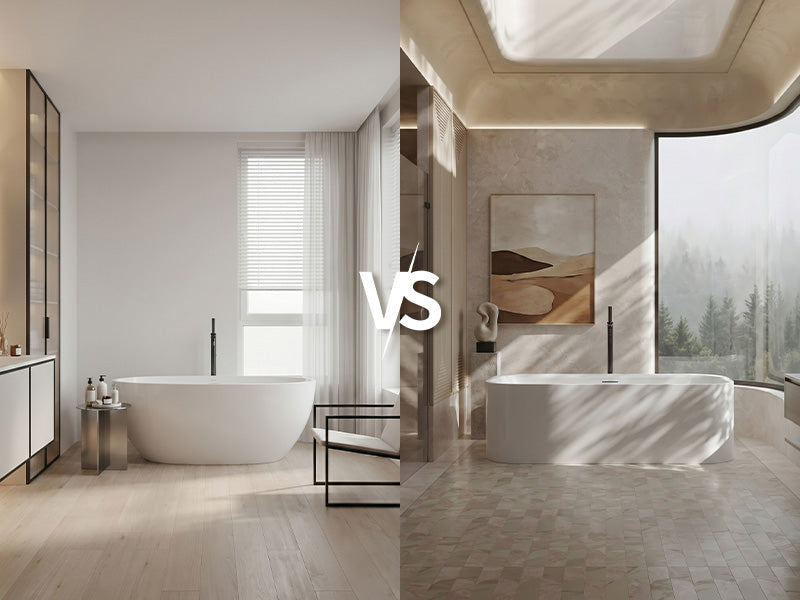
Choosing a bathtub may seem straightforward at first, but once you begin planning a bathroom renovation, the question quickly becomes more complex: Which bathtub material is best?
Among the many options available today, stone resin bathtubs and acrylic bathtubs remain the two most popular choices for modern bathrooms. Both materials are widely used in residential projects, luxury renovations, and contemporary interior designs, yet they offer distinctly different experiences in terms of comfort, appearance, performance, and long-term value.
For homeowners investing in a new bathroom, the decision often comes down to balancing aesthetics, durability, maintenance, installation requirements, and budget. While acrylic bathtubs have long been favored for their affordability and versatility, stone resin bathtubs have become increasingly popular for their premium appearance and exceptional bathing experience.
Understanding the differences between these materials can help you choose a bathtub that not only complements your design vision but also delivers lasting satisfaction for years to come.
Understanding the Difference Between Stone Resin and Acrylic
Before comparing performance, it's important to understand what each material actually is.
What Is a Stone Resin Bathtub?
A stone resin bathtub is manufactured using a blend of natural stone minerals and advanced resin compounds. This combination creates a dense, solid structure that mimics the look and feel of natural stone while offering enhanced durability and easier maintenance.
Stone resin is often selected for high-end bathroom projects because of its architectural appearance, smooth matte finish, and excellent thermal properties.
Common characteristics include:
- Solid and substantial feel
- Premium matte finish
- Superior heat retention
- Excellent durability
- Modern sculptural aesthetics
Many luxury hotels, boutique resorts, and contemporary residences now incorporate stone resin bathtubs as a focal point within the bathroom.
What Is an Acrylic Bathtub?
Acrylic bathtubs are created by heating and molding acrylic sheets, which are then reinforced with fiberglass for structural support.
Because acrylic is lightweight, flexible, and cost-effective, it remains one of the most widely used bathtub materials in residential construction.
Common characteristics include:
- Lightweight construction
- Affordable pricing
- Wide variety of shapes and sizes
- Smooth glossy finish
- Easy installation
For many homeowners, acrylic offers an attractive balance between functionality, design flexibility, and value.
Stone Resin vs Acrylic Bathtub: Performance Comparison
When evaluating bathtub materials, appearance alone should not drive the decision. Long-term comfort and performance often have a greater impact on daily satisfaction.
Quick Comparison Table
| Feature | Stone Resin | Acrylic |
|---|---|---|
| Appearance | Premium, architectural | Clean, versatile |
| Heat Retention | Excellent | Good |
| Durability | Excellent | Good |
| Weight | Heavy | Lightweight |
| Maintenance | Easy | Easy |
| Surface Feel | Solid and substantial | Warm and smooth |
| Installation | More demanding | Easier |
| Lifespan | Long-term investment | Reliable everyday use |
| Price Range | Premium | Budget-friendly |
Both materials perform well, but they cater to different priorities and project goals.
Heat Retention and Bathing Comfort
One of the biggest differences between stone resin and acrylic becomes apparent during use.
A bathtub should do more than hold water—it should provide a comfortable and relaxing soaking experience.
Because stone resin contains natural mineral content, it naturally retains heat for longer periods. This helps maintain water temperature without frequent adjustments, making extended soaking sessions more enjoyable.
For homeowners seeking a spa-inspired bathroom experience, thermal performance can significantly influence overall comfort.
Acrylic also performs well compared to many traditional materials. Its surface warms quickly and feels comfortable to the touch, though it generally loses heat faster than stone resin during prolonged use.
Why This Matters
For many homeowners, the bathtub serves as a daily retreat from busy schedules. Better heat retention means:
- Longer, more comfortable baths
- Reduced need to add hot water
- Enhanced relaxation
- Improved energy efficiency
In terms of pure soaking comfort, stone resin typically holds the advantage.
Durability and Long-Term Value
A bathtub is often one of the longest-lasting fixtures in a home. Selecting the right material can reduce maintenance concerns and improve long-term satisfaction.
Stone resin is highly regarded for its structural integrity. Its dense composition resists everyday wear, maintains its appearance over time, and offers excellent resistance to fading or discoloration.
Minor surface imperfections can often be refinished, helping preserve the bathtub's appearance for years.
Acrylic remains a durable option for everyday residential use, but because the material is softer, it can be more susceptible to scratches and surface wear over time.
| Durability Factor | Stone Resin | Acrylic |
|---|---|---|
| Structural Stability | Exceptional structural strength and rigidity | Flexible structure with good everyday durability |
| Impact Resistance | Highly resistant to dents and wear | Less likely to chip due to material flexibility |
| Lifespan | Designed for long-term performance and longevity | Reliable for daily use but may show wear sooner |
| Surface Repairability | Minor scratches can often be sanded and refinished | Minor scratches and damage can often be repaired |
| Long-Term Value | Premium investment with extended service life | Lower initial cost and affordable replacement |
For homeowners planning a long-term investment, stone resin generally provides greater longevity.
Design Impact: Which Material Looks More Luxurious?
In modern bathroom design, aesthetics matter just as much as functionality.
Today's luxury bathrooms are increasingly defined by sculptural forms, clean architectural lines, and carefully selected materials. The bathtub often serves as the visual centerpiece of the room.
This is where stone resin truly excels.
Its solid construction and matte finish create a sophisticated appearance that feels substantial and refined. The material pairs beautifully with natural stone, wood, brushed metals, and contemporary lighting schemes.
Stone resin bathtubs are frequently featured in:
- Luxury residential projects
- Boutique hotels
- Spa-inspired bathrooms
- Contemporary minimalist interiors
Acrylic bathtubs offer a cleaner and more versatile appearance, making them suitable for a wide range of bathroom styles. However, they generally do not achieve the same level of visual depth and material richness associated with premium stone resin designs.

Stone Resin vs Acrylic: Pros and Cons
| Durability Factor | Stone Resin Bathtub | Acrylic Bathtub |
|---|---|---|
| Advantages | Premium luxury appearanceSuperior heat retentionExceptional durabilityStrong structural stabilityLong service lifeRefinishable surface | Affordable price pointLightweight installationWide design flexibilityComfortable surface temperatureEasy maintenance |
| Considerations | Higher initial investmentHeavier weightMay require additional floor support | More prone to scratchingLess substantial appearanceLower heat retention compared to stone resin |
Real-World Buying Considerations
Beyond material performance, practical factors should also influence your decision.
Bathroom Size
Stone resin and acrylic bathtubs are available in a wide range of dimensions. However, larger freestanding models can significantly influence room layout and circulation.
Always consider:
- Floor space
- Clearance around the tub
- Plumbing placement
- Entry pathways
Installation Requirements
Acrylic bathtubs are considerably lighter, making them easier to transport and install.
Stone resin bathtubs may require additional planning, particularly for upper-level installations where floor load capacity becomes an important consideration.
Maintenance Expectations
Both materials are relatively easy to maintain when cleaned regularly with non-abrasive products.
To preserve appearance:
- Wipe surfaces after use
- Avoid harsh chemical cleaners
- Follow manufacturer recommendations
Budget Planning
Acrylic typically offers a lower upfront cost, making it attractive for budget-conscious renovations.
Stone resin generally represents a higher initial investment but often delivers greater perceived value, longevity, and visual impact over time.
Which Material Is Right for Your Bathroom?
The best bathtub material depends entirely on your priorities.
| Stone Resin | Acrylic |
|---|---|
| You want a luxury bathroom centerpiece | You need a lightweight solution |
| You value premium aesthetics | You are working within a tighter budget |
| You enjoy long soaking baths | You want easier installation |
| You prioritize durability and longevity | You need greater flexibility in size and design |
| You are designing a high-end renovation | You prioritize practicality and value |
Neither material is inherently better for every project. The ideal choice is the one that aligns with your design goals and lifestyle needs.
Explore Monblari® Bathtub Collections
At Monblari®, we believe exceptional bathroom design begins with thoughtful material selection.
Our collections are designed to balance aesthetics, comfort, and long-term performance, offering solutions for both contemporary luxury interiors and practical residential renovations.
Monblari® Stone Resin Collection
Designed for homeowners seeking:
- Architectural elegance
- Deep soaking comfort
- Premium matte finishes
- Exceptional durability
Monblari® Acrylic Collection
Ideal for:
- Modern bathroom remodels
- Lightweight installation
- Everyday comfort
- Design flexibility
Final Thoughts
When comparing stone resin vs acrylic bathtubs, there is no universal winner—only the right choice for your specific project.
Acrylic remains one of the most practical and versatile bathtub materials available today, offering affordability, ease of installation, and dependable performance.
Stone resin, however, continues to gain popularity among homeowners and designers seeking a more elevated bathing experience. Its combination of durability, heat retention, and architectural beauty makes it one of the most compelling choices for modern luxury bathrooms.
By understanding the strengths of each material, you can confidently invest in a bathtub that enhances both your home and your everyday routine.
For those seeking a balance of craftsmanship, comfort, and contemporary design, exploring both stone resin and acrylic collections is the best place to begin.