Lifestyle
Wood, Stone & Texture: Three Bathroom Material Pairings
Explore three bathroom material pairings through wood tones, expressive marble and sculptural textures, with ideas for balancing warmth, pattern and contrast.
At a glance
A bathroom can contain several beautiful finishes and still feel unsettled. Often, the missing element is a clear relationship between them: which surface leads, which supports it, and where the eye can rest.
Wood tones, stone patterns and sculptural textures offer different ways to build that relationship. These three pairings explore visual balance through MonBlari designs. Consult individual product specifications for confirmed materials and finishes.
1. Wood Tones & Quiet Surfaces
In the FOREST imagery, a dark, wood-toned exterior contrasts with a pale interior. Vertical detailing gives the form rhythm, while smoother surrounding surfaces keep the composition calm. The useful contrast is between a richly detailed feature and a quieter backdrop.
Rather than repeating strong grain throughout the room, allow one element to carry the texture. Sand or muted beige can support a warmer palette; light grey can introduce a cooler contrast. Choose the surrounding finishes together so their undertones feel intentional.
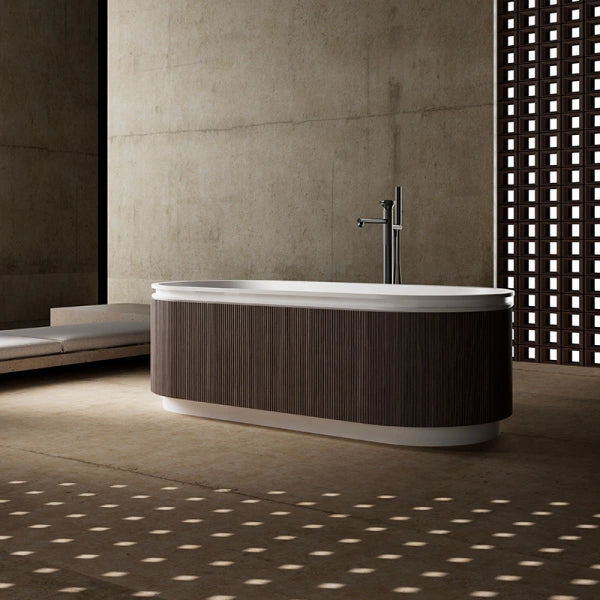

Keep some counter and wall space free of additional patterns. A selective echo of the darker tone in a mirror frame or small accessory can be enough to connect the composition.
2. Expressive Marble & Restrained Wood Grain
MATRIX combines geometric outlines with expressive marble veining. The outline gives the eye a clear boundary; the pattern introduces movement within it. Wood can provide a quieter companion when its grain is less pronounced than the stone.
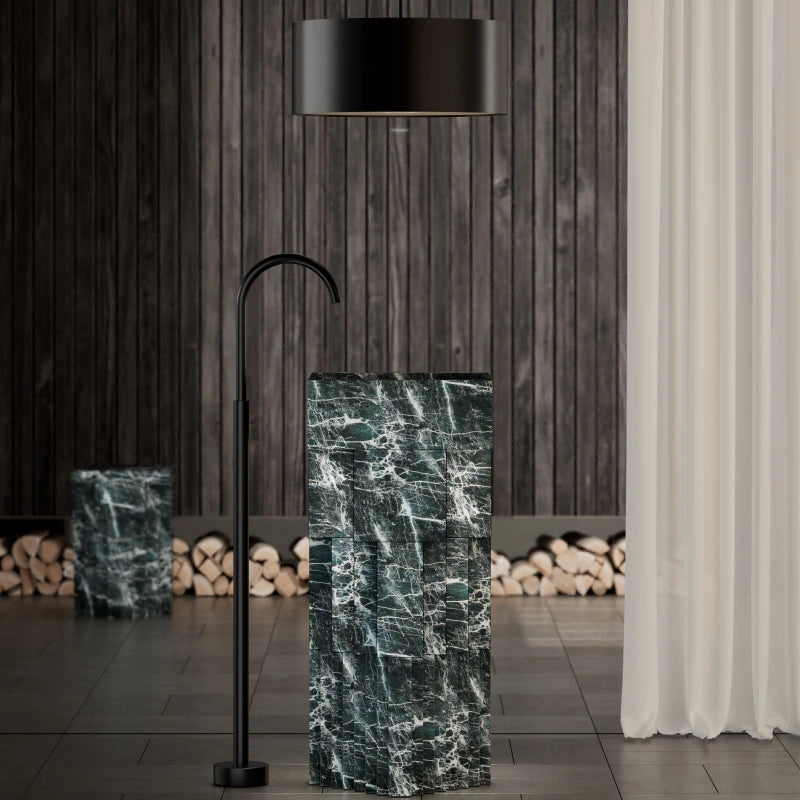

Choose a supporting wood tone in relation to the actual stone. Darker tones can echo its deeper markings, while lighter finishes can soften the overall composition. Keep the largest background surfaces relatively quiet rather than adding several equally strong patterns.
3. Stone Pattern & Sculptural Rhythm
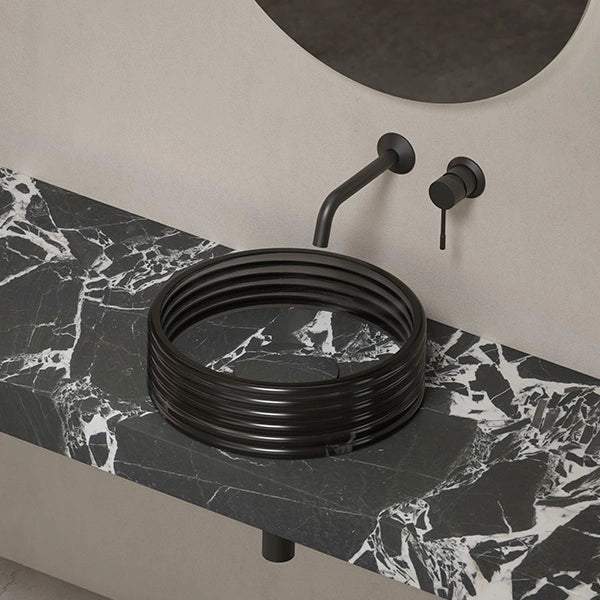
The third pairing contrasts irregular pattern with repeated horizontal ridges. One brings variation; the other brings order. Together they can create a focal piece that needs little additional decoration.


Use broad areas of understated flooring and restrained walls around this combination. Soft directional light can reveal the ridges through shadow, while a small amount of wood-toned detailing adds warmth without becoming another dominant texture.
For another approach to visual depth, explore the way resin surfaces interact with a bathroom composition.
Read Resin Surfaces & Forms in Bathroom Design
Comparing the Three Pairings
On smaller screens, scroll horizontally to view the full table.
| Pairing | Let This Lead | Supporting Finishes | Keep in Check |
|---|---|---|---|
| Wood tones and quiet surfaces | Warm texture against a pale, smoother surface. | Muted walls and flooring with complementary undertones. | Strong grain repeated across too many surfaces. |
| Marble and restrained wood grain | Veining framed by a defined silhouette. | Quieter wood grain and understated background surfaces. | Several bold patterns competing in one view. |
| Stone pattern and sculptural rhythm | The contrast between ridges and irregular pattern. | Simple surfaces, selective warm accents and soft light. | Additional textures that obscure the focal piece. |
Build Around One Clear Relationship
Begin with the piece you want to notice first. Identify whether its character comes from tone, pattern, outline or surface detail, then choose finishes that support it. A coherent palette needs connection, contrast and enough quiet space for each element to be appreciated.