Lifestyle
Resin Surfaces and Forms in MonBlari Bathroom Design
Explore how transparent and translucent resin brings color, light, and sculptural form to MonBlari bathtubs, vessel sinks, and pedestal sinks.
At a glance
A curved basin rim catches the light. Vertical grooves give a bathtub a changing pattern of highlights and shadows. Across MonBlari’s transparent and translucent resin designs, color and form work together to give familiar bathroom objects a different visual presence.
From a fluted bathtub to a geometric pedestal sink, each piece reveals a different relationship between its outline, its surface, and the space around it.

Color with Visible Depth
On an opaque surface, color is read mainly across the exterior. With transparent or translucent resin, the background can remain partly visible through the object. Overlapping contours and changing light can make the same color appear softer in one area and deeper in another.
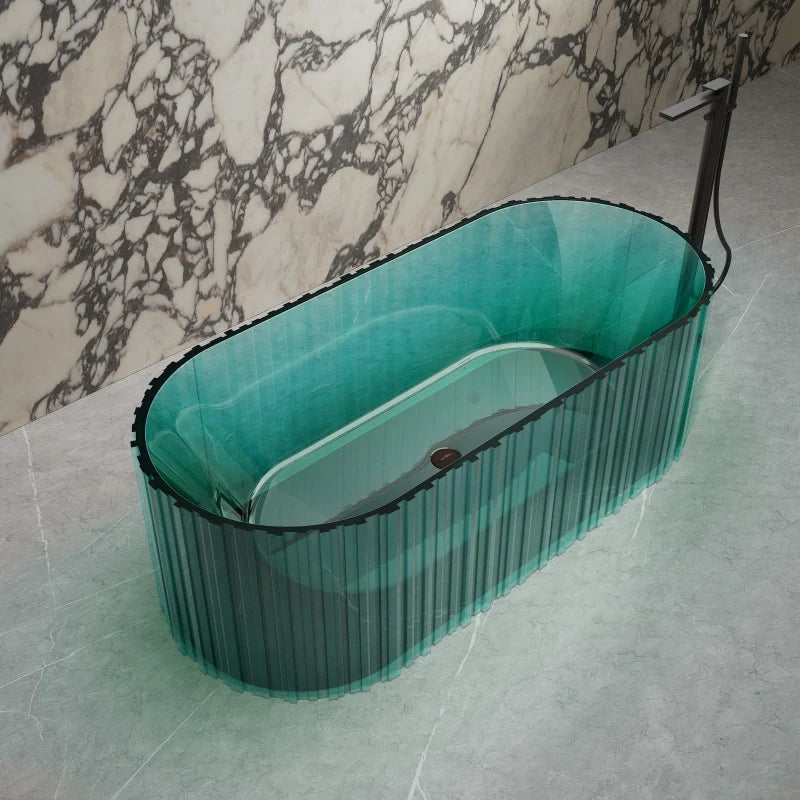
A green bathtub can pick up tones from its surroundings, while an amber basin introduces a warmer accent against a countertop. The effect varies with the individual design, the viewing angle, and the lighting in the room.
This makes the setting part of the composition. A quieter backdrop gives the outline and color more room to stand out; a strongly patterned surface behind or beneath the piece creates a more layered visual effect.
How Surface Detail Meets Light
Fluting gives light a series of edges to follow. On the green resin bathtub, repeated vertical grooves break the exterior into narrow bands, emphasizing its rounded form through alternating highlights and shadows.
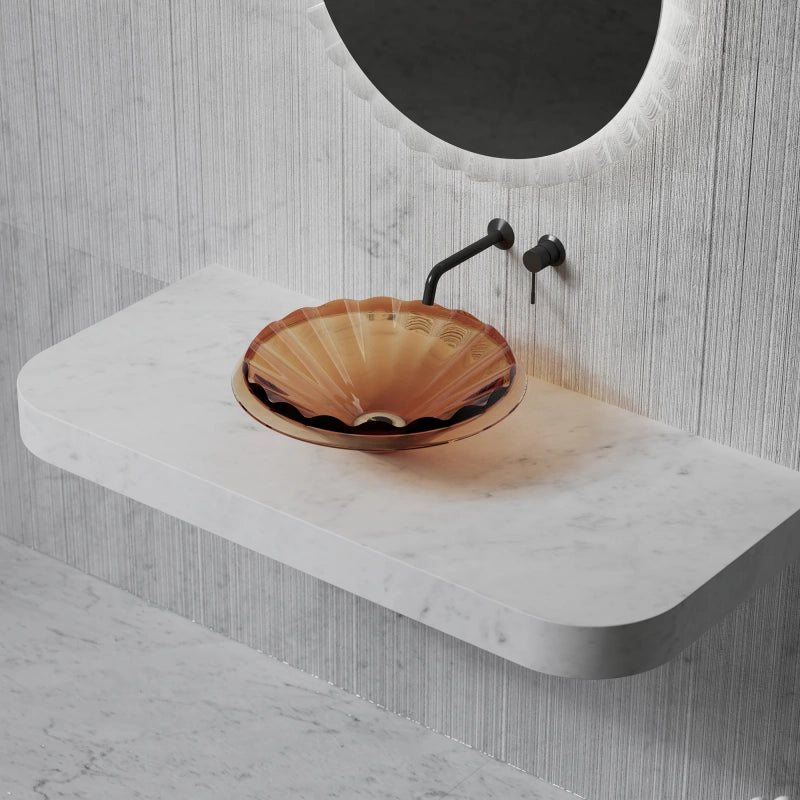
The amber basin detail offers another expression of this relationship. Its shaped surface creates a pattern that becomes especially noticeable where light passes through or reflects from the basin. Texture is part of how the object is seen, as well as how its outline is defined.


From Curved Rims to Sculptural Silhouettes
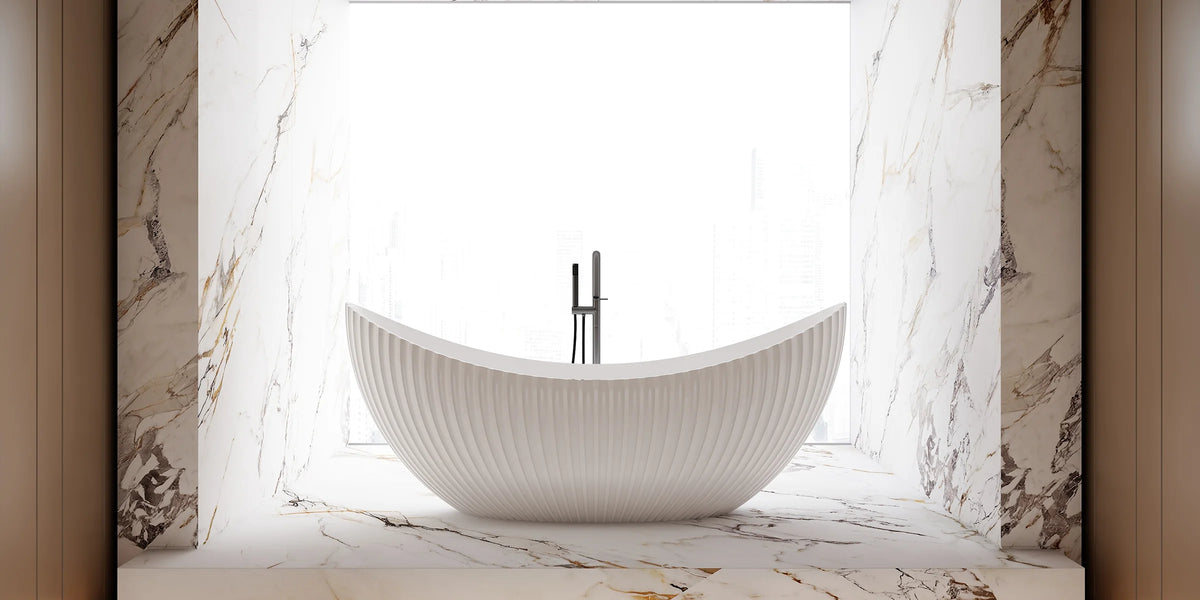
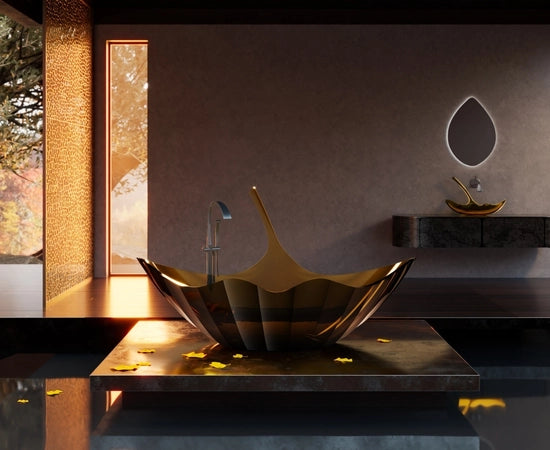
Surface detail is only one part of the design. The overall silhouette determines how a piece occupies the room: a rounded bath creates a broad horizontal presence, while a raised edge draws attention to a particular part of its profile.
In the GINKNOVA collection, leaf-inspired forms give the material a more expressive outline. The amber resin bathtub shown here uses sweeping curves and a rising profile to create a distinctive focal point.
A fluted bathtub takes a different approach. Its repeated lines create a more regular rhythm around the exterior. Both designs use resin’s visible depth, but their shapes give them different characters within a bathroom.
Resin at Different Scales
A vessel sink brings color and transparency to the countertop. Viewed from above, the Clear Amber Vessel Sink reveals the relationship between its rim, bowl, and outer contour. The countertop remains an important part of the overall composition around the basin.
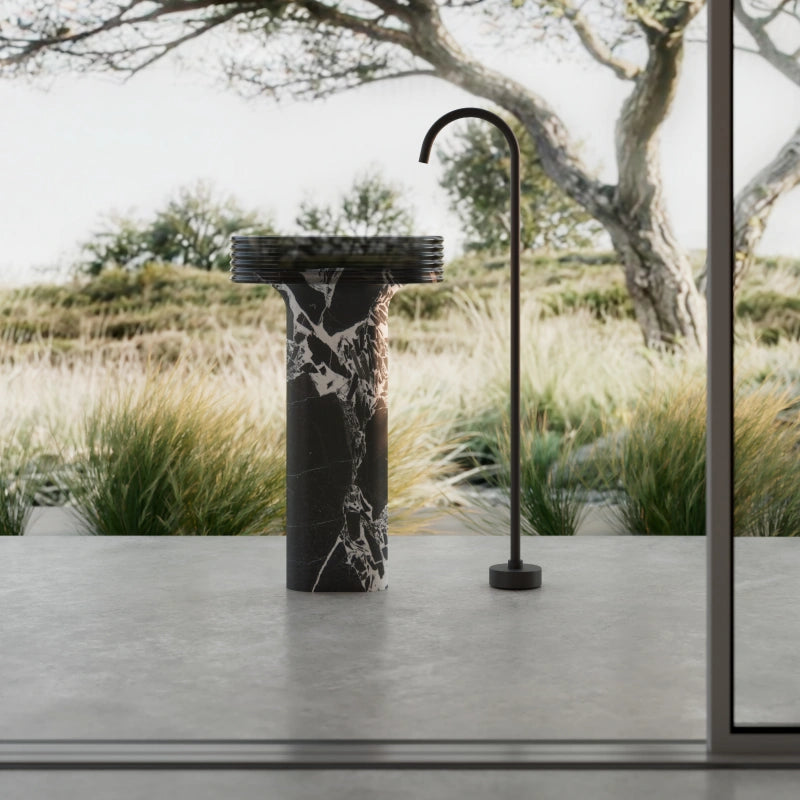
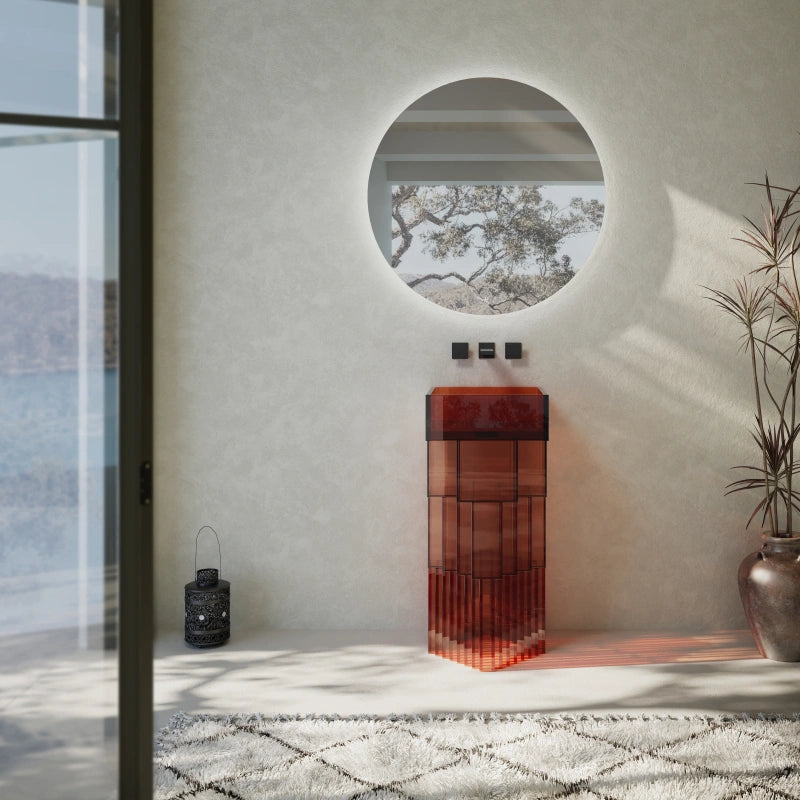
The MATRIX pedestal sink extends that presence toward the floor. Its angular outline and geometric detailing create a vertical composition, giving the washing area a sculptural focus. Explore the MATRIX collection to see the wider design language behind this piece.


When considering MonBlari’s resin bathroom sinks, look at the complete setting as well as the basin itself. A vessel design interacts closely with its countertop, while a pedestal design establishes a stronger relationship with the floor and surrounding wall.
Making Room for the Material
Resin can provide a focal point without requiring every surface in the bathroom to compete for attention. Simple surrounding finishes allow a distinctive color, a curved rim, or a geometric silhouette to remain clear.
Consider the piece from the angles you will see most often: entering the room, approaching the basin, or looking across the bath. Those views reveal different aspects of its transparency and shape. The most useful comparison is how each design sits within the space you are creating.
Questions About Resin and Appearance
Do all resin products have the same transparent appearance?
No. Resin products can differ in color, transparency, and surface detail. This article focuses on the transparent and translucent designs shown here; check the images and description of each individual product for its appearance.
How does transparent resin look different from solid surface?
The transparent resin designs shown here allow light and parts of their surroundings to remain visible through the body. An opaque solid surface design presents a more visually solid form. The choice changes how color, contours, and background surfaces interact.
Will the color look identical in every setting?
The perceived color can change with lighting, surrounding finishes, viewing angle, and screen settings. Review several product images to understand the design rather than relying on a single photograph.
Explore related pieces
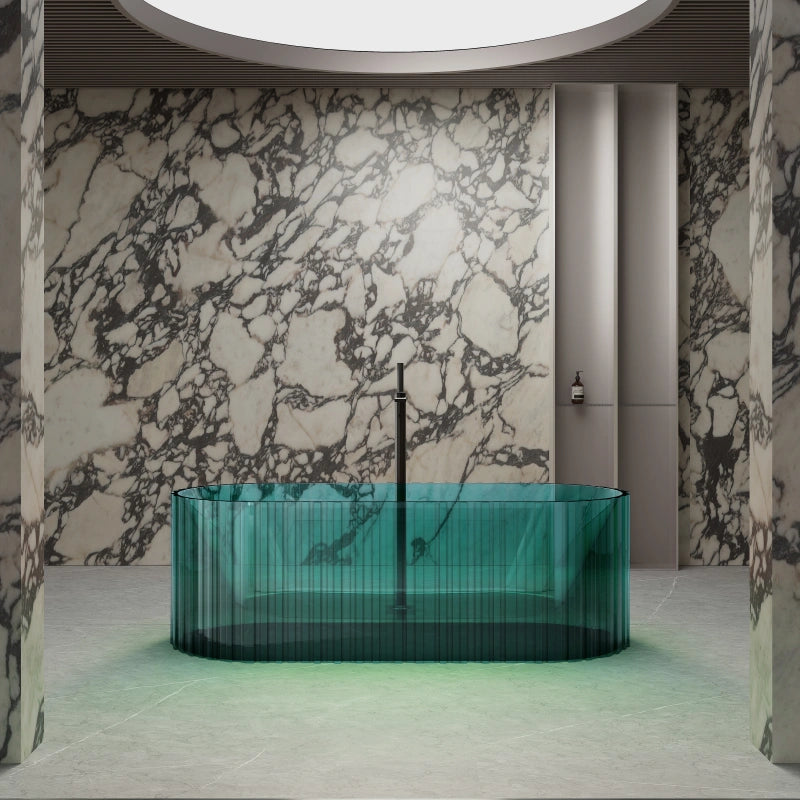
67" MonBlari Transparent Resin Freestanding Bathtub Fluted
$4,112.00 USD

72 Inch MonBlari GINKNOVA Series Freestanding Bathtub
$5,499.00 USD
69 Inch MonBlari GINKNOVA Series Freestanding Bathtub
$10,399.00 USD
16.9" MonBlari Transparent Resin Sink Clear Amber Bathroom Vessel Sink
$738.00 USD
MonBlari MATRIX Series Sculptural Transparent Resin Pedestal Sink
$2,375.00 USD