Why Bathtub Material Matters More Than You Think
When shopping for a new bathtub, most homeowners naturally focus on the details they can see first—its shape, size, color, or overall design. After all, the bathtub is often one of the largest visual elements in a bathroom, making style an important part of the decision.
But what many buyers don't realize is that the material beneath the surface has an even greater impact on their everyday experience.
A bathtub's material influences how long it retains heat, how durable it will be after years of daily use, how easy it is to clean, how resistant it is to stains and scratches, and even how complicated the installation process will be. It can also affect your renovation budget, maintenance costs, and the overall lifespan of the bathtub.
Two bathtubs may look nearly identical in a showroom, yet perform very differently once installed. One may stay warm through a long soak with minimal maintenance, while another may cool quickly, scratch more easily, or require replacement much sooner than expected.
That's why choosing the right bathtub material is just as important as choosing the right size or style.
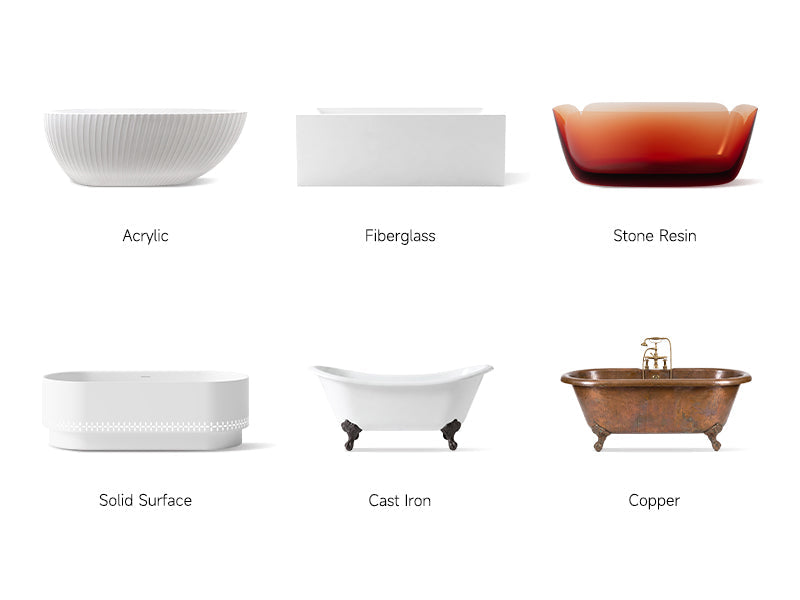
In this guide, we'll compare today's most common bathtub materials—including acrylic, fiberglass, stone resin, solid surface, cast iron, copper, cultured marble, and porcelain-enameled steel—to help you understand the advantages, disadvantages, typical costs, and ideal applications for each. Whether you're planning a complete bathroom remodel or simply replacing an aging bathtub, this guide will help you choose a material that fits both your lifestyle and your budget.

What Should You Consider Before Choosing a Bathtub Material?
Before comparing individual materials, it's helpful to understand what actually makes one bathtub better suited to your needs than another.
Many homeowners assume that the most expensive material is automatically the best choice. In reality, the ideal bathtub depends on how you use your bathroom, how much maintenance you're willing to perform, and what matters most to you over the long term.
For example, someone renovating a guest bathroom may prioritize affordability and lightweight installation, while another homeowner designing a luxury primary suite may place greater importance on heat retention, premium appearance, and long-term durability.
Instead of asking "Which bathtub material is best?", a better question is:
"Which bathtub material is best for my home?"
The following factors are worth considering before making a decision.
| Factor | Why It Matters |
|---|---|
| Durability | Determines how well the bathtub resists cracks, chips, scratches, and everyday wear. |
| Heat Retention | Influences how long bathwater stays warm during soaking. |
| Maintenance | Affects how much time and effort you'll spend cleaning and maintaining the tub. |
| Weight | Impacts transportation, installation, and whether additional floor support may be required. |
| Price | Plays a major role in both the initial purchase and overall renovation budget. |
| Appearance | Influences the visual style of your bathroom, from traditional to contemporary. |
| Repairability | Some materials are easier and less expensive to repair if damaged. |
| Expected Lifespan | Helps estimate the bathtub's long-term value and replacement cycle. |
Looking at these factors together provides a much more balanced way to evaluate bathtub materials than simply comparing prices alone.
Quick Comparison of Popular Bathtub Materials
Every bathtub material has its own strengths.
Some excel at retaining heat, making them ideal for long, relaxing soaks. Others are lightweight and affordable, making installation easier and reducing remodeling costs. Premium materials often provide exceptional durability and aesthetics but come with a higher upfront investment.
The comparison below offers a quick overview before we examine each material in detail.
| Material | Heat Retention | Durability | Maintenance | Weight | Typical Price (USD) |
|---|---|---|---|---|---|
| Acrylic | ★★★★☆ | ★★★★☆ | ★★★★☆ | Light | $600–$2,000 |
| Fiberglass | ★★★☆☆ | ★★★☆☆ | ★★★☆☆ | Very Light | $300–$1,000 |
| Stone Resin | ★★★★★ | ★★★★★ | ★★★★★ | Heavy | $2,000–$5,500 |
| Solid Surface | ★★★★★ | ★★★★★ | ★★★★★ | Heavy | $2,500–$6,500 |
| Cast Iron | ★★★★★ | ★★★★★ | ★★★★☆ | Very Heavy | $1,500–$5,000 |
| Copper | ★★★★★ | ★★★★★ | ★★★★☆ | Heavy | $4,000–$10,000+ |
| Cultured Marble | ★★★★☆ | ★★★★☆ | ★★★★☆ | Heavy | $1,200–$3,000 |
| Porcelain-Enameled Steel | ★★★☆☆ | ★★★★☆ | ★★★★☆ | Medium | $500–$1,500 |
While these ratings provide a useful starting point, no single material ranks first in every category.
Acrylic remains one of the most popular choices because it offers an excellent balance of affordability, durability, and easy maintenance. Stone resin and solid surface materials are widely favored in luxury bathrooms for their premium appearance and impressive heat retention. Cast iron continues to be valued for its exceptional longevity, while copper appeals to homeowners seeking distinctive craftsmanship and timeless character.
Ultimately, the best material depends on your priorities—not simply on which material has the highest price tag.
Which Bathtub Material Is Right for Your Lifestyle?
Rather than beginning with a specific material, it often helps to start with the kind of bathroom you want to create.
If your goal is an affordable renovation that minimizes installation costs, lightweight materials like acrylic or fiberglass are practical options that work well in many homes.
If you enjoy long, relaxing baths several times a week, materials with superior heat retention—such as stone resin, solid surface, cast iron, or copper—may provide a noticeably more comfortable soaking experience.
Homeowners planning a high-end remodel often place equal importance on durability and design. Premium materials not only deliver excellent performance but also create a more refined visual presence, making the bathtub a true centerpiece rather than simply a functional fixture.
Maintenance is another factor worth considering. Busy households often appreciate materials with smooth, non-porous surfaces that resist stains and require minimal upkeep. Choosing a bathtub that's easy to clean can make everyday ownership much more enjoyable over the years.
There's no universally "perfect" bathtub material. The best choice is the one that balances comfort, appearance, durability, maintenance, and budget in a way that fits your home and lifestyle.
In the next section, we'll examine each of today's most popular bathtub materials individually, comparing their strengths, weaknesses, average costs, expected lifespan, and the types of homeowners they're best suited for. By the end of this guide, you'll have a much clearer understanding of which material offers the best long-term value for your bathroom renovation.
Comparing the Most Popular Bathtub Materials
With so many bathtub materials available today, it's easy to feel overwhelmed by the options. Every manufacturer claims to offer the perfect balance of durability, comfort, and value, yet each material performs differently once it's installed in a real home.
Some materials are designed to keep bathwater warm for as long as possible, while others focus on affordability, lightweight installation, or timeless aesthetics. Understanding these differences is the key to choosing a bathtub you'll still enjoy years from now.
Let's take a closer look at the most common bathtub materials found in today's bathrooms.

Acrylic
Acrylic has become one of the most popular bathtub materials for modern homes, and for good reason. Made by reinforcing vacuum-formed acrylic sheets with fiberglass, it offers an excellent balance of durability, affordability, and design flexibility.
Because acrylic is lightweight, it is easier to transport and install than heavier materials such as cast iron or stone resin. Manufacturers can also mold acrylic into a wide variety of shapes, making it an excellent choice for freestanding tubs, alcove tubs, drop-in tubs, and corner bathtubs.
Its non-porous surface resists everyday stains and is easy to clean using mild household cleaners, making it especially appealing for busy families.
| Acrylic Overview | Details |
|---|---|
| Advantages | Lightweight, affordable, easy to clean, wide variety of styles |
| Drawbacks | Can scratch more easily than premium materials |
| Average Price | $500–$2,000 |
| Expected Lifespan | 15–20 Years |
| Best For | Family bathrooms, first-time remodels, everyday use |

Fiberglass
Fiberglass is often chosen for budget-conscious renovations because it is one of the most economical bathtub materials available.
It is extremely lightweight, making transportation and installation straightforward. This can help reduce labor costs during remodeling projects.
However, fiberglass is generally less durable than acrylic. Over time, the surface may become dull, develop scratches, or show signs of wear after years of regular use. It also provides less insulation, meaning bathwater tends to cool more quickly.
| Fiberglass Overview | Details |
|---|---|
| Advantages | Lowest cost, lightweight, easy installation |
| Drawbacks | Shorter lifespan, scratches more easily, lower heat retention |
| Average Price | $300–$1,000 |
| Expected Lifespan | 10–15 Years |
| Best For | Guest bathrooms, rental properties, budget remodels |
Fiberglass can be an excellent short-term solution, but homeowners planning a long-term renovation often choose more durable materials.

Stone Resin
Stone resin has become one of the fastest-growing premium bathtub materials in recent years, particularly among homeowners seeking a luxury spa-like bathroom.
Rather than relying on thin molded shells, stone resin combines natural mineral powders with advanced resins to create a dense, solid structure that feels substantial and refined. The result is a bathtub with exceptional heat retention, excellent durability, and a smooth matte finish that complements both modern and transitional interiors.
Unlike many traditional materials, minor surface marks can often be repaired, helping maintain the bathtub's appearance over many years.
| Stone Resin Overview | Details |
|---|---|
| Advantages | Outstanding heat retention, premium appearance, durable, low maintenance |
| Drawbacks | Higher initial investment, heavier than acrylic |
| Average Price | $2,000–$5,000+ |
| Expected Lifespan | 25–30+ Years |
| Best For | Luxury homes, daily soaking, premium bathroom remodels |
For homeowners seeking long-term value rather than simply the lowest purchase price, stone resin offers one of the best combinations of comfort, durability, and design available today.
Explore MonBlari Stone Resin Bathtubs
Solid Surface
Solid surface bathtubs share many qualities with stone resin and are increasingly popular in high-end residential projects.
Their seamless construction creates a clean, minimalist appearance while providing excellent resistance to stains and everyday wear. Because the color extends throughout the material rather than existing only on the surface, minor scratches can often be polished away instead of requiring replacement.
Another advantage is their excellent thermal performance, allowing bathwater to remain comfortably warm for longer periods.
| Solid Surface Overview | Details |
|---|---|
| Advantages | Seamless appearance, excellent durability, repairable surface, premium finish |
| Drawbacks | Premium price, heavier than acrylic |
| Average Price | $2,500–$6,000+ |
| Expected Lifespan | 25–30+ Years |
| Best For | Designer bathrooms, luxury renovations, modern interiors |
Homeowners looking for clean architectural lines often find solid surface to be an ideal material choice.
Explore MonBlari Solid Surface Bathtubs

Cast Iron
Few bathtub materials have earned a reputation for longevity quite like cast iron.
Manufactured by coating heavy cast iron with porcelain enamel, these bathtubs are exceptionally durable and can remain in service for decades with proper care.
Their greatest strength is heat retention. Once filled, a cast iron bathtub holds warmth remarkably well, creating an exceptionally comfortable bathing experience.
The trade-off, however, is weight.
Cast iron tubs are among the heaviest bathtubs available and may require reinforced flooring in some installations.
| Cast Iron Overview | Details |
|---|---|
| Advantages | Extremely durable, excellent heat retention, timeless appearance |
| Drawbacks | Very heavy, higher installation cost |
| Average Price | $1,500–$5,000+ |
| Expected Lifespan | 50+ Years |
| Best For | Traditional homes, heritage renovations, long-term homeowners |
For those willing to invest in longevity, cast iron remains one of the most durable bathtub materials ever produced.

Copper
Copper bathtubs are as much works of art as they are functional fixtures.
Each tub develops a natural patina over time, giving it a unique appearance that cannot be replicated by synthetic materials. Copper also offers impressive natural heat retention and possesses antimicrobial properties that help inhibit bacterial growth.
Because of the craftsmanship involved, copper bathtubs are generally considered a luxury product.
| Copper Overview | Details |
|---|---|
| Advantages | Unique appearance, excellent heat retention, naturally antimicrobial |
| Drawbacks | Premium price, develops natural patina over time |
| Average Price | $4,000–$10,000+ |
| Expected Lifespan | 50+ Years |
| Best For | Luxury homes, custom bathrooms, statement designs |
For homeowners seeking a distinctive centerpiece, few materials make a stronger visual impression than copper.
Which Material Offers the Best Overall Value?
Choosing the best bathtub material isn't about finding a single winner—it's about matching the material to your priorities.
If affordability and ease of installation matter most, acrylic continues to provide exceptional value.
If you're investing in a luxury bathroom that emphasizes comfort, premium craftsmanship, and long-term durability, materials such as stone resin and solid surface deliver an experience that's difficult to match.
Traditional homeowners may appreciate the lasting strength of cast iron, while those creating a custom designer bathroom may be drawn to the character and elegance of copper.
Ultimately, every material has its place. Understanding the strengths and limitations of each one allows you to choose with confidence rather than relying on price alone.
In the final section, we'll compare all of these materials side by side, explore current bathroom design trends, answer the most common buying questions, and help you determine which bathtub material is truly the best fit for your home and lifestyle.
Which Bathtub Material Is Best? Final Comparison, Buying Advice & FAQs
After comparing the most common bathtub materials, one question remains:
Which bathtub material is actually the best?
The truth is, there isn't a single material that's perfect for every homeowner.
The best bathtub isn't necessarily the most expensive one—it's the one that fits your bathroom, your lifestyle, and how you plan to use it over the next 10 to 20 years. A guest bathroom has different priorities than a luxury primary suite, and a family with young children may value different features than someone designing a spa-inspired retreat.
Instead of focusing on a single "winner," it's more helpful to understand which material performs best in different situations.
Side-by-Side Bathtub Material Comparison
Each material offers its own balance of comfort, durability, maintenance, and cost. Looking at them
| Material | Heat Retention | Durability | Maintenance | Weight | Average Lifespan | Price Range |
|---|---|---|---|---|---|---|
| Acrylic | ★★★★☆ | ★★★★☆ | ★★★★☆ | Light | 15–20 Years | $500–$2,000 |
| Fiberglass | ★★★☆☆ | ★★★☆☆ | ★★★☆☆ | Very Light | 10–15 Years | $300–$1,000 |
| Stone Resin | ★★★★★ | ★★★★★ | ★★★★★ | Heavy | 25–30+ Years | $2,000–$5,000+ |
| Solid Surface | ★★★★★ | ★★★★★ | ★★★★★ | Heavy | 25–30+ Years | $2,500–$6,000+ |
| Cast Iron | ★★★★★ | ★★★★★ | ★★★★☆ | Very Heavy | 50+ Years | $1,500–$5,000+ |
| Copper | ★★★★★ | ★★★★★ | ★★★★☆ | Heavy | 50+ Years | $4,000–$10,000+ |
| Cultured Marble | ★★★★☆ | ★★★★☆ | ★★★★☆ | Heavy | 20–25 Years | $1,200–$3,000 |
| Porcelain-Enameled Steel | ★★★☆☆ | ★★★★☆ | ★★★★☆ | Medium | 20–30 Years | $500–$1,500 |
While this comparison provides a useful overview, the right material ultimately depends on your renovation priorities.
Which Bathtub Material Should You Choose?
Rather than recommending the same material for everyone, consider what matters most to you.
| If Your Priority Is... | Recommended Material |
|---|---|
| Best Overall Value | Acrylic |
| Luxury Appearance | Stone Resin |
| Superior Heat Retention | Stone Resin or Cast Iron |
| Longest Lifespan | Cast Iron |
| Easy Everyday Maintenance | Stone Resin or Solid Surface |
| Lightweight Installation | Acrylic |
| Budget-Friendly Remodel | Fiberglass |
| Contemporary Bathroom Design | Solid Surface |
| Traditional Luxury | Cast Iron |
| Statement Piece | Copper |
For many homeowners, narrowing the decision down to two or three materials is much easier than trying to compare every option on the market.
Cost vs. Long-Term Value
It's natural to focus on the purchase price when comparing bathtubs, but the initial cost is only one part of the investment.
A lower-priced bathtub may save money upfront, yet require replacement much sooner. Premium materials often have a higher purchase price but can offer better durability, lower maintenance, and a longer service life.
Looking at long-term value instead of purchase price alone often provides a more realistic picture.
| Material | Initial Cost | Long-Term Value |
|---|---|---|
| Fiberglass | Low | Moderate |
| Acrylic | Moderate | Excellent |
| Cultured Marble | Moderate | Very Good |
| Porcelain-Enameled Steel | Moderate | Good |
| Stone Resin | High | Excellent |
| Solid Surface | High | Excellent |
| Cast Iron | High | Excellent |
| Copper | Premium | Excellent |
For homeowners planning to stay in their home for many years, investing in a higher-quality material often pays off through better durability, greater comfort, and fewer maintenance concerns.
Bathtub Material Trends in 2026
Bathroom design continues to evolve, but one trend has become increasingly clear: homeowners are placing greater emphasis on quality, comfort, and longevity rather than simply choosing the lowest-priced option.
Modern renovations increasingly favor materials that combine durability with clean, timeless design.
Premium materials such as stone resin and solid surface have become increasingly popular in contemporary bathrooms because they provide excellent heat retention, a refined matte finish, and minimal maintenance. Acrylic remains one of the most widely selected materials thanks to its versatility and affordability, while cast iron continues to appeal to homeowners who appreciate traditional craftsmanship and exceptional longevity.
Rather than replacing older materials entirely, today's market offers more choices than ever before. The best material depends on the style of home, renovation budget, and the experience you want every time you step into your bathroom.
Frequently Asked Questions
What is the best bathtub material overall?
There isn't one universal answer. Acrylic offers outstanding value for most households, while stone resin, solid surface, and cast iron are often preferred for premium bathrooms because of their durability, appearance, and heat retention.
Which bathtub material lasts the longest?
Cast iron and copper can last more than 50 years with proper care. Stone resin and solid surface also provide excellent long-term durability and are well suited for everyday use.
Which bathtub material keeps water warm the longest?
Stone resin, cast iron, solid surface, and copper all offer excellent heat retention, making them ideal for homeowners who enjoy long soaking baths.
Is acrylic better than fiberglass?
For most homeowners, yes. Acrylic is generally stronger, retains its appearance longer, and provides better insulation, making it a worthwhile upgrade over fiberglass in many situations.
Is stone resin worth the extra cost?
If you're looking for a premium bathtub with exceptional durability, comfortable heat retention, and a modern appearance, many homeowners find that stone resin provides excellent long-term value.
Which bathtub material is easiest to clean?
Stone resin, solid surface, and acrylic all feature smooth, non-porous surfaces that are easy to maintain with mild, non-abrasive cleaners.
What is the best bathtub material for a luxury bathroom?
Stone resin, solid surface, cast iron, and copper are all excellent choices for luxury bathrooms. The best option depends on whether you prefer a modern minimalist aesthetic or a more traditional design.
Final Thoughts
Choosing a bathtub material is about much more than comparing specifications or prices. It's about selecting a bathtub that will continue to look beautiful, feel comfortable, and perform reliably for years to come.
If you're renovating on a budget, acrylic remains one of the smartest all-around choices thanks to its affordability, versatility, and dependable performance. If your goal is to create a luxury bathroom that emphasizes comfort, craftsmanship, and timeless design, premium materials such as stone resin, solid surface, cast iron, and copper each offer unique advantages that justify their investment.
Rather than asking which material is objectively "best," consider which one best complements your home, your daily routine, and your long-term expectations. A thoughtful decision today can enhance both your bathroom and your everyday living experience for many years.
At MonBlari, we believe every homeowner deserves a bathtub that matches both their lifestyle and design vision. That's why our collections include carefully selected bathtub materials—from practical acrylic models to premium stone resin and solid surface designs—allowing you to choose the perfect balance of beauty, durability, and everyday comfort.