Lifestyle
How to Mix Bathroom Collections
Combine different bathroom collections through complementary shapes, balanced visual scale and a considered color palette, with two MonBlari pairing ideas.
At a glance
A bathroom does not need every fixture to come from the same collection. Different pieces can feel connected through a repeated curve, a related color or a deliberate balance of visual weight. The aim is to make the relationship clear without making every detail identical.
These two MonBlari pairings are design starting points, not verified installation layouts. Check the selected products and their technical drawings separately before planning a room.
1. FLOWER & SPRING: Connect Through Curves and Color

The FLOWER washing-area design and SPRING bathtub offer an expressive starting point. Their outlines differ, but rounded forms and a related accent color can connect them. Neutral surrounding surfaces give that relationship room to be seen.


Shape: look for a shared softness rather than identical curves. A basin can echo the bathtub while the furniture beneath provides a more structured base.
Scale: consider each piece in its own zone. A smaller washing area does not need to match the bathtub’s length; it needs enough surrounding space to feel intentional.
Color: repeat an accent selectively. Similar-looking colors in photographs are not a guarantee of an exact finish match, so confirm the selected options before ordering.
2. Dark Floating Forms & a Light Fluted Bathtub


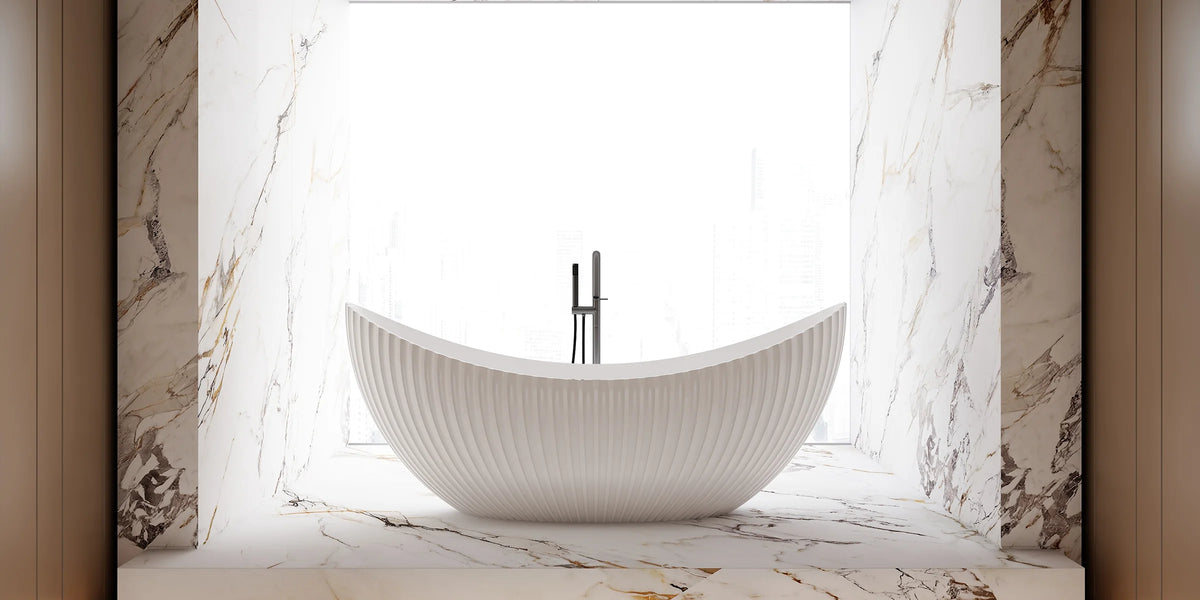
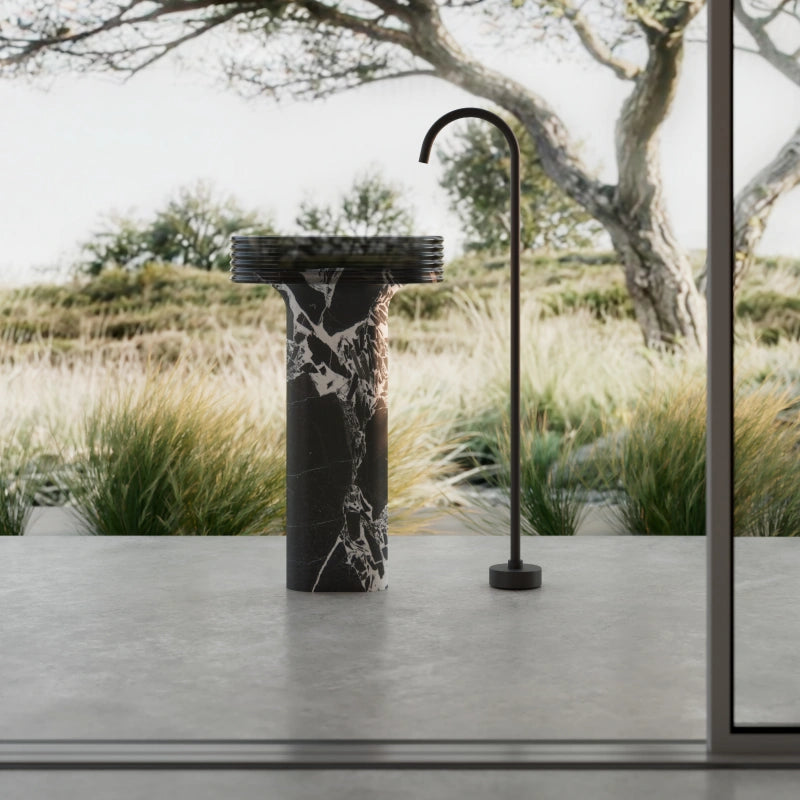
The VELA washing-area design and the light fluted bathtub create a different relationship. The dark horizontal form anchors one wall, while the bathtub introduces a rounded outline and repeated vertical detail.
Their dimensions do not need to match. Compare how much attention each piece attracts from the doorway and from the main standing positions. Dark color and strong surface detail can make a piece feel more prominent, even when its physical footprint is modest.
Keep walls and flooring understated if both products have expressive surfaces. A small shared detail, such as a restrained metal finish, can connect the zones without adding another major color.
A Simple Check Before Combining Collections
On smaller screens, scroll horizontally to view the full table.
| Check | What to Look For | What to Avoid |
|---|---|---|
| Shape | One repeated curve, line or complementary outline. | Requiring every piece to have the same silhouette. |
| Visual scale | A clear main feature with quieter supporting pieces. | Using matching widths as proof of a balanced layout. |
| Color | A dominant tone with a small number of accents. | Assuming photographs guarantee an exact color match. |
| Practical fit | Selected dimensions, plumbing, support and usable space. | Treating a visual pairing as installation approval. |
Let Each Collection Keep Its Character
Start with the piece you most want to include, then select a companion that shares one quality and differs in another. This makes the relationship readable while allowing both designs to retain their character. Review the complete room before committing: door movement, access, standing space and storage still need to work together.