Guide
MATRIX: Where Order Meets the Unexpected
Inspired by numerical relationships, MATRIX brings stepped geometry to marble and transparent resin. Discover how proportion, natural veining and light give its bathtub, pedestal sinks and shower stool a shared architectural character.
At a glance
 Some interiors feel connected before we can explain why. A line echoes another. Shapes repeat at different scales. Materials change, yet the room holds together.
MATRIX begins with this sense of order. Inspired by the proportional relationships found in numerical sequences, the collection translates repetition and measured shifts in scale into architectural forms. Natural marble introduces something less predictable: veins, variations and patterns that follow their own course.
Between these two ideas—calculated geometry and natural variation—the collection finds its character.
A Rhythm Built from Proportion
Viewed from a distance, MATRIX has a clear, composed silhouette. Look closer, and its stepped profiles and repeated planes reveal a more layered structure. Edges extend, surfaces recede, and each change in depth gives the eye another line to follow.
The numerical inspiration becomes a visual rhythm rather than a formula the viewer needs to understand. It connects the broad proportions of the bathtub with the vertical presence of the pedestal sink and the smaller scale of the bathroom stool.
These pieces share a design language without relying on identical dimensions or shapes. Their relationship comes through proportion, repetition and the way one plane meets the next.
When Geometry Meets Natural Marble
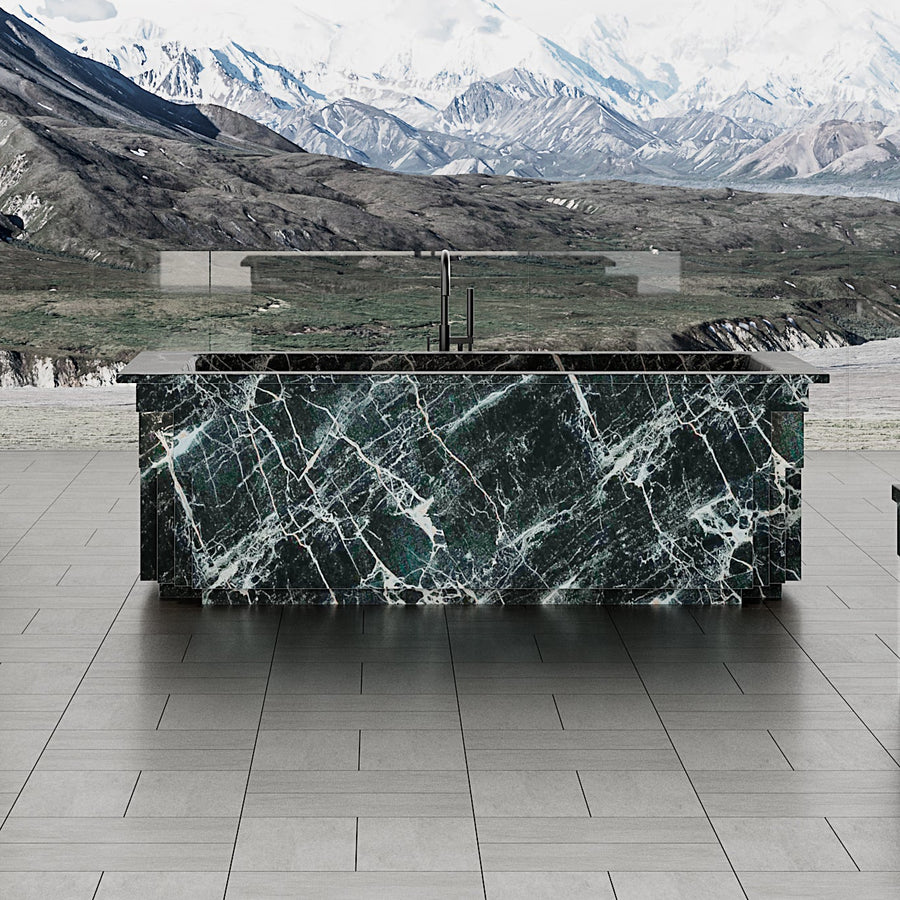
In the Verde Alpi marble pieces, deep green stone is crossed by expressive pale veining. The geometry gives those markings a framework, while the stone prevents the composition from feeling entirely predictable.
A vein may travel across a broad surface, break into finer lines or become more prominent along an edge. These natural differences give each piece its own visual composition within the same design.
The marble construction uses precisely cut thin slabs joined at 45-degree angles. This approach brings the planes together around defined corners, placing the stone’s pattern and the precision of the form in close conversation.
The result rewards both a wider view and a closer look: an architectural object across the room, and a detailed natural surface when approached.
The Same Geometry, Reinterpreted in Resin
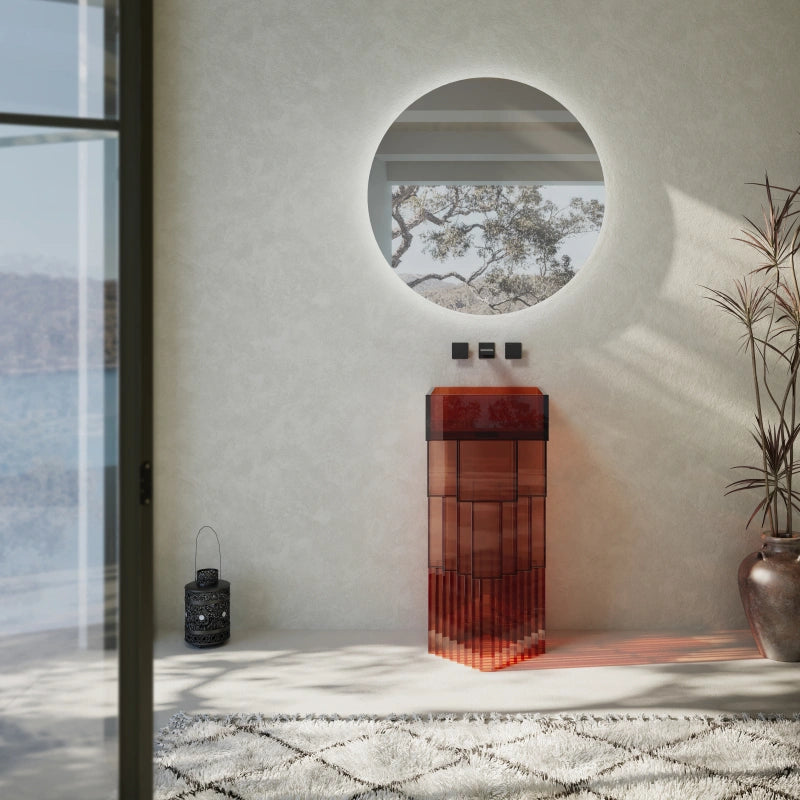
MATRIX also includes a transparent resin pedestal sink. Its stepped form carries the collection’s geometric rhythm into a different material expression.
Where marble draws attention to veining across the surface, transparent resin brings depth and light into the experience of the object. Overlapping planes and changes in thickness make the structure visible in another way, with its appearance shifting according to the surrounding light and background.
The contrast is part of the collection’s appeal. The marble pedestal sink has a dense, grounded presence; the resin version offers a more translucent expression of the same architectural idea.
A Collection Across Three Scales
The MATRIX collection comprises a marble bathtub, a marble pedestal sink, a marble shower stool and a transparent resin pedestal sink.
- The marble bathtub gives the design language its broadest expression, with extended planes and stepped edges that establish a strong presence in the room.
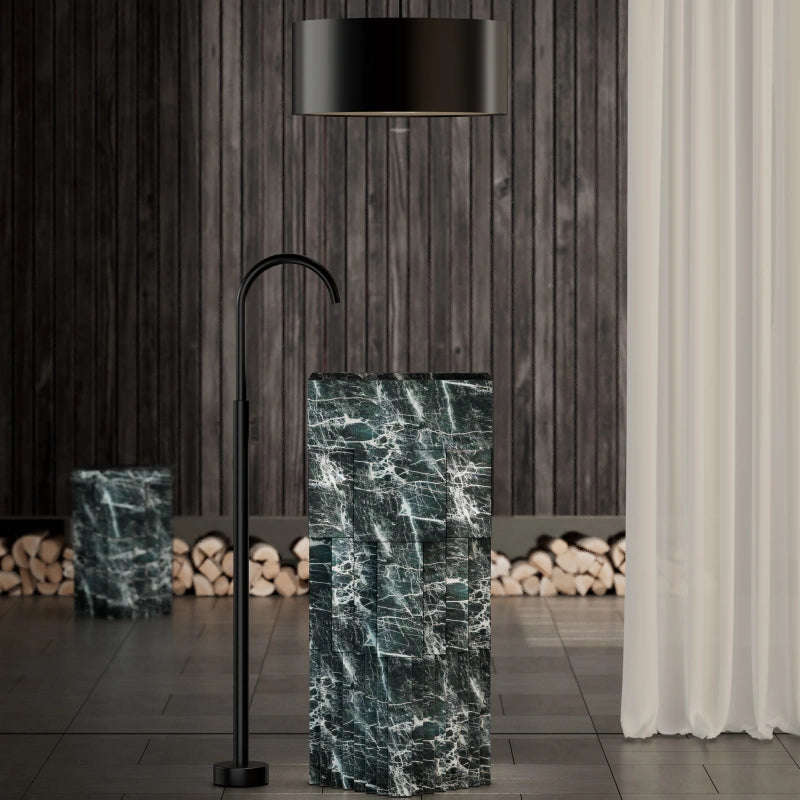
- The marble pedestal sink brings the same rhythm into a vertical form, concentrating the relationship between geometry and natural veining.
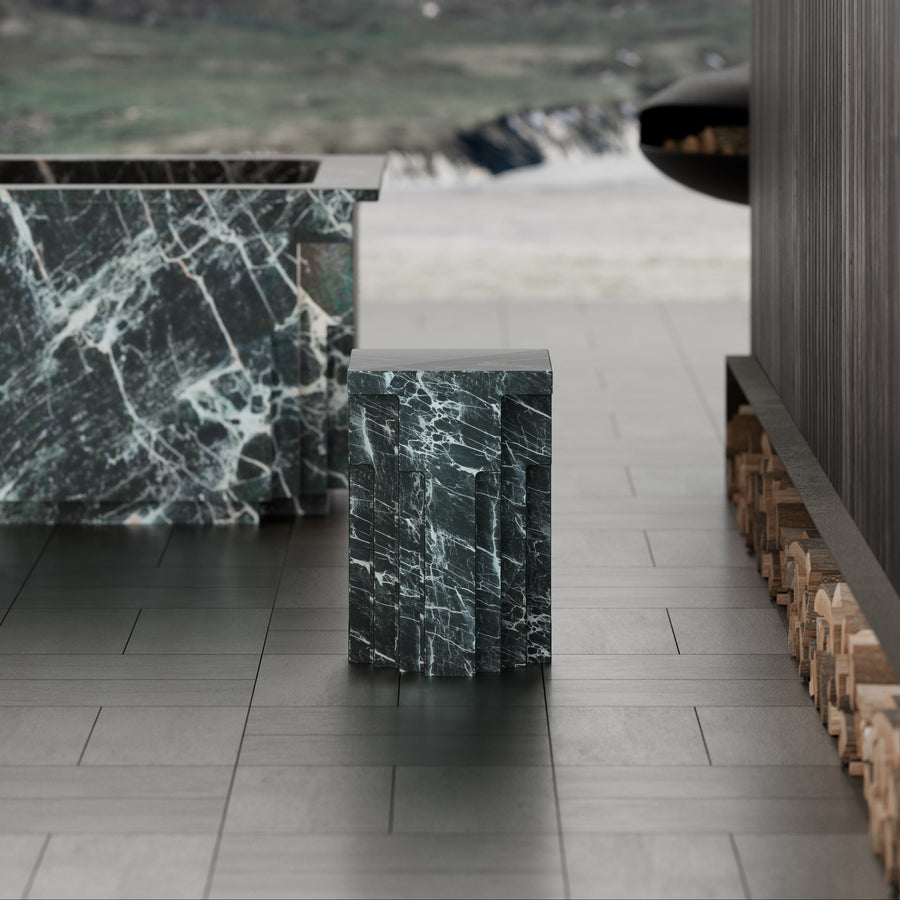
- The marble shower stool repeats the architectural details at a smaller scale, creating a visual connection with the larger pieces.
- The transparent resin pedestal sink offers an alternative material expression, introducing translucency while retaining the collection’s distinctive structure.
A room can bring several pieces together, allowing the repeated forms to connect different areas. A single piece can also stand on its own, with the surrounding materials providing a quieter setting.
Making Room for Contrast
MATRIX can sit comfortably within an interior that combines different periods and textures. Its measured geometry provides a point of connection, while the marble or resin contributes a distinct material presence.
Deep green marble can be paired with warm plaster, dark timber or aged brass. A vintage mirror or a piece of mid-century furniture can introduce another shape without needing to repeat every line of the collection.
For a quieter composition, allow the stone’s veining or the resin’s transparency to carry most of the visual detail. Broad, less patterned surfaces nearby give the stepped forms room to be seen.
The aim is a considered relationship between the pieces and their surroundings. Repetition provides continuity; contrast gives the room its individual character.
How Light Reveals the Form
Daylight and room lighting bring another dimension to MATRIX. Light falling from the side can make the stepped edges more apparent, while softer illumination gives the overall silhouette greater emphasis.
Across the marble, changing light alters which veins and planes draw the eye. With the transparent resin pedestal sink, the background and direction of light also influence the perception of depth and color.
Considering the pieces under the room’s daytime and evening lighting helps reveal these differences. The geometry stays the same, but the way it is experienced can change throughout the day.
Order with Individual Character
MATRIX brings a clear structure to materials that have their own expressive qualities. Proportion connects the collection; marble veining and resin transparency give its pieces different ways to occupy a space.
That balance leaves room for a personal interior—one shaped by the objects, textures and light that belong to the people who use it.