

Whether you're planning a bathroom renovation, shopping for a new freestanding bathtub, or simply wondering if your home's water heater can keep up with a long soak, one question comes up surprisingly often:
How much water does a bathtub hold?

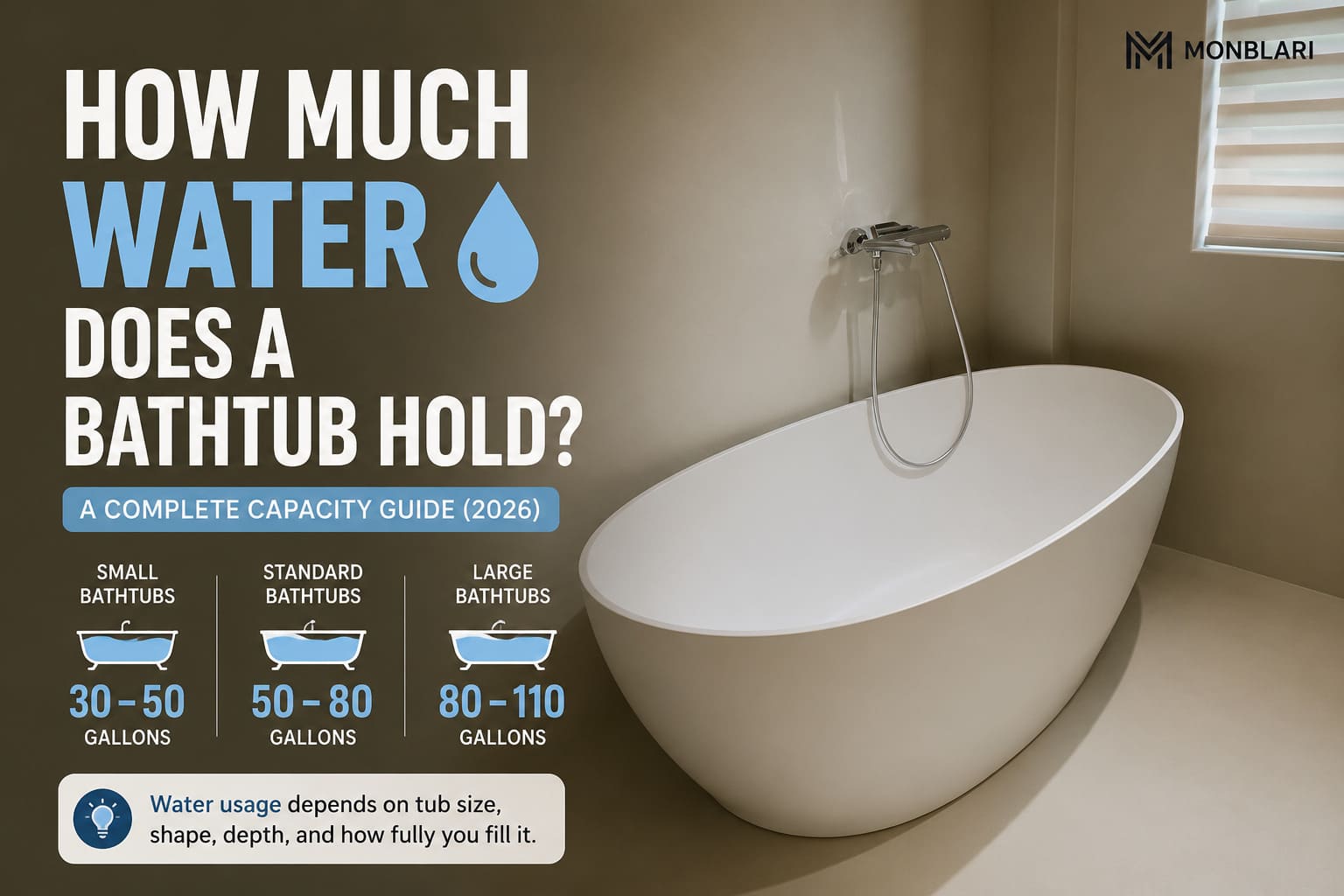
The answer depends on several factors, including the bathtub's size, depth, shape, and interior design. While most standard bathtubs hold 40 to 60 gallons of water, larger soaking and freestanding bathtubs can easily hold 60 to 90 gallons or more.
Understanding bathtub capacity isn't just about numbers. It can help you choose the right bathtub size, estimate your home's hot water requirements, compare different bathtub styles, and even understand your long-term water usage before making a purchase.
In this guide, we'll explain how many gallons different bathtubs typically hold, how bathtub dimensions affect water capacity, and what you should consider before choosing the perfect bathtub for your home.
How Many Gallons Does a Bathtub Hold?
If you're looking for the short answer, here's a quick reference.
| Bathtub Type | Average Water Capacity |
|---|---|
| Standard Alcove Bathtub | 40–60 gallons |
| Freestanding Bathtub | 50–80 gallons |
| Deep Soaking Tub | 60–90 gallons |
| Corner Bathtub | 70–100 gallons |
| Japanese Soaking Tub | 40–70 gallons |
| Walk-In Bathtub | 40–80 gallons |
Most homeowners never actually fill a bathtub to its maximum capacity. Once a person enters the tub, their body naturally displaces part of the water, meaning the amount of water used during a typical bath is usually 10–20% less than the bathtub's full capacity.
Quick Fact
A standard bathtub typically holds around 50 gallons of water, while a larger 67-inch freestanding soaking tub may hold approximately 70 gallons, depending on its interior depth and shape.
Why Bathtub Capacity Matters

Many people assume bathtub capacity is simply an interesting statistic, but it actually affects several practical aspects of everyday life.
Choosing the right bathtub capacity can help you:
- Determine whether your water heater can supply enough hot water.
- Estimate monthly water consumption.
- Compare different bathtub sizes before purchasing.
- Select the most comfortable soaking depth.
- Plan your bathroom renovation more efficiently.
For example, installing a luxury soaking tub without considering your home's hot water capacity could mean waiting for the water heater to recover before enjoying a full bath. On the other hand, choosing a bathtub that's too small may limit comfort, especially for taller users. Understanding capacity before purchasing helps avoid both situations.
Standard Bathtub Size and Capacity
Bathtub size is one of the biggest factors affecting water capacity. In general, longer and deeper bathtubs require more water, although interior shape also plays an important role.
The table below provides a general comparison of common bathtub sizes and the amount of water they typically hold.
| Bathtub Size | Average Capacity | Best For |
|---|---|---|
| 55-inch | 40–45 gallons | Compact bathrooms |
| 59-inch | 45–55 gallons | Everyday family use |
| 60-inch | 50–60 gallons | Standard bathrooms |
| 67-inch | 60–75 gallons | Deep soaking experience |
| 71-inch | 75–90 gallons | Luxury master bathrooms |
These figures are averages, and the actual capacity may vary depending on the bathtub's interior design, wall thickness, and soaking depth.
Bathtub Capacity Varies by Design
Even when two bathtubs have similar exterior dimensions, they may hold noticeably different amounts of water.
For example, a traditional alcove bathtub generally has a shallower soaking depth than a modern freestanding bathtub of the same length. Likewise, Japanese soaking tubs are designed to be shorter but significantly deeper, allowing a full-body soak while using a relatively compact footprint.
This is why comparing dimensions alone doesn't always provide an accurate picture of how much water a bathtub will actually require.
When selecting a bathtub, it's always worth considering both the exterior size and the usable interior bathing space rather than focusing on overall length alone.
Editor's Note
Water capacity should never be the only factor when choosing a bathtub. Comfort, soaking depth, bathroom layout, and your household's hot water supply all play an equally important role in finding the right bathtub for your home.
How to Calculate Bathtub Water Capacity
If you're comparing different bathtub models, knowing how to estimate water capacity can help you make a more informed decision.
The simplest method is to calculate the bathtub's interior volume rather than relying solely on the exterior dimensions. Since bathtubs feature curved sides and sloped backs, the actual capacity is usually lower than a simple rectangular calculation would suggest.
A commonly used formula is:
Length × Width × Water Depth × 0.004329 = Approximate Gallons
| Interior Size | Estimated Capacity |
|---|---|
| 55" × 24" × 14" | 42 gallons |
| 59" × 26" × 15" | 52 gallons |
| 67" × 28" × 16" | 70 gallons |
| 71" × 30" × 17" | 86 gallons |
These figures are intended as estimates. Actual capacity varies depending on the bathtub's interior shape, overflow level, and manufacturer design.
Quick Tip
Manufacturers usually list the maximum water capacity, but everyday use typically requires less water because your body naturally displaces part of the volume once you enter the bathtub.
Can Your Water Heater Fill Your Bathtub?
Choosing a bathtub without considering your home's hot water supply is one of the most common mistakes homeowners make.
While a bathtub may hold 70 gallons of water, that doesn't necessarily mean your water heater can provide 70 gallons of hot water at one time. Most households mix hot and cold water while filling the tub, but your water heater still plays an important role in determining whether you'll enjoy a comfortable soak.
The table below provides a general reference.
| Water Heater Size | Recommended Bathtub Capacity |
|---|---|
| 40 Gallons | Up to 55-inch bathtubs |
| 50 Gallons | 55–60 inch bathtubs |
| 60 Gallons | 59–67 inch bathtubs |
| 80 Gallons | Large soaking and freestanding tubs |
If multiple family members use hot water around the same time—for example, running the dishwasher or taking showers—you may want to choose a slightly larger water heater than the minimum recommendation.
Planning both your bathtub and water heater together helps ensure a more enjoyable bathing experience while avoiding unnecessary upgrades later.
Does Bathtub Material Affect Water Capacity?
This is another question many homeowners ask while comparing bathtubs.
The short answer is no.
The amount of water a bathtub holds is determined primarily by its interior dimensions and soaking depth, not by the material it's made from.
Whether your bathtub is made from acrylic, cast iron, stone resin, or solid surface, two tubs with the same interior dimensions will have very similar water capacities.
However, different materials do influence the overall bathing experience.
For example, premium solid surface and stone resin bathtubs generally retain heat longer than acrylic models, helping bath water stay warm for an extended period. That means you may spend less time adding additional hot water during a long soak, even though the overall water capacity remains similar.
Design Insight
When comparing bathtubs, treat capacity and material as two separate decisions. Capacity determines how much water the tub can hold, while material influences comfort, heat retention, durability, and long-term performance.
Typical Water Capacity of Modern Freestanding Bathtubs
Freestanding bathtubs have become one of the most popular choices for contemporary bathrooms thanks to their elegant appearance and deeper soaking experience.
Although they often require slightly more water than a traditional alcove bathtub, many homeowners feel the additional comfort is well worth it.
Below is a general reference for common freestanding bathtub sizes.
| Freestanding Tub Size | Average Capacity |
|---|---|
| 59-inch | 50–55 gallons |
| 63-inch | 55–65 gallons |
| 67-inch | 65–75 gallons |
| 71-inch | 75–90 gallons |
Keep in mind that these are average estimates. Oval soaking tubs, double-ended designs, and extra-deep models may hold more water than standard freestanding bathtubs of similar length.
Choosing the Right Capacity for Your Home
Bigger isn't always better.
A larger bathtub offers a deeper soaking experience, but it also requires more hot water, takes longer to fill, and may not be necessary for every household.
When choosing the right bathtub size, consider:
- Your bathroom dimensions.
- The capacity of your home's water heater.
- Who will use the bathtub most often.
- Whether you prefer quick baths or deep soaking.
- Long-term water and energy efficiency.
For many households, a 59-inch or 67-inch freestanding bathtub provides an excellent balance between comfort, water usage, and installation flexibility, making these sizes among the most popular choices for modern bathroom renovations.
Editor's Note
The ideal bathtub isn't the one that holds the most water—it's the one that fits your space, supports your lifestyle, and provides the comfort you're looking for every day.