
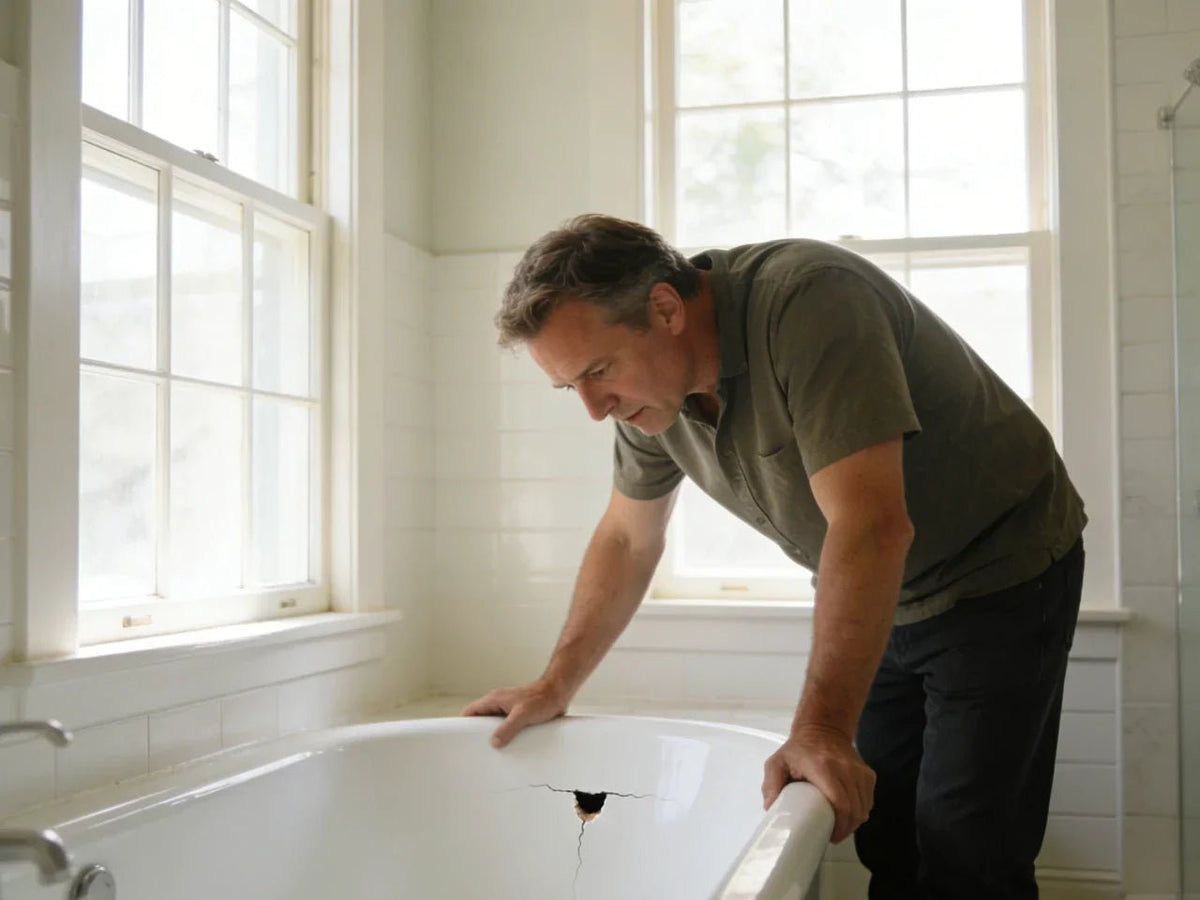
Repairing a bathtub base is one of those home repairs that feels small—until it isn’t. In both bathtub and shower setups, a tiny chip can turn into a stain magnet, and a hairline crack can slowly become a leak.
Because there are different types of bathtub materials, the way you repair a bathtub depends heavily on the material your bathtub is made from.
Can You Repair a Bathtub Base Yourself or Call a Professional?
Before you start any DIY repair, make sure you’re using the right tools and following basic DIY tips—many bathtub repairs fail simply because homeowners rush the prep.
DIY Bathtub Repair Checklist for Homeowners (1-Minute Test)
DIY is usually a good fit if all are true:
-
The damage is a chip or surface crack and there is no leaking
-
The crack is small (commonly under 2 inches) and the tub bottom doesn’t flex when you press or stand on it
-
You can clean the area until it is 100% dry and free of soap scum, oils, and grime
Call a pro (or plan replacement) if any are true:
-
A crack runs across the tub bottom, is long (often over 3 inches), widens, or keeps coming back
-
The floor flexes when you stand on it (DIY failure rates are often reported over 50% in these cases)
-
You see active leaking, soft spots, or signs of water damage under or around the bathtub
What a Successful DIY Tub Repair Really Looks Like
A well-prepped patch on a small chip or hairline crack often holds up very well. For minor fixes, success is commonly around 80–90% when cleaning and prep are done carefully. The catch is that the repair can still look “slightly different” in certain light, especially if you’re trying to match an older tub’s color or sheen.
Bathtub Repair Cost: DIY vs Professional vs Replacement
| Option | Typical cost | Typical timeline |
| DIY repair kit | $20–$60 | 4–24 hours including dry times; full cure 24–72 hours |
| Professional refinishing/reglazing | ~$500–$2,000 | Often completed in hours, with curing afterward |
| Replacement (scope-dependent) | ~$1,000–$4,000+ | Days to weeks depending on remodel work |
If your goal is to fix bath tub damage for the least money and the tub base feels solid, DIY is usually worth trying.
Common Types of Bathtub Base Damage (Chips, Cracks & Wear)
Most people notice bathtub damage on the floor first because that’s where you stand, where bottles drop, and where water sits the longest. But the “type” of damage matters because the repair process changes.
Chips are the most common and usually happen when something heavy hits the tub. Think shampoo bottles, a dropped shower head, or a tool during a bathroom remodel. A chip is often shallow—about 1/16 to 1/4 inch—and it may show a darker layer under the surface.
Cracks are different because they can signal movement. Some are only surface-level, like a thin scratch line. Others are deeper and can spread when the tub flexes. Cracks are often linked to settling, age, temperature changes, or a tub base that was not supported well during install.
Surface wear and dulling is when the rest of the tub looks tired, not just one spot. This is where people start searching for “bathtub paint peeling” or “why is my tub finish flaking?” If a large area is worn, spot repair may not blend well. Refinishing the whole tub often makes more sense.
Red Flags: When Tub Base Damage Is Not a DIY Repair
Bathtub bottoms take body weight, so they reveal structural problems first. If you see spider cracking and the floor feels springy, or if you repaired the same crack before and it returned, that points to movement under the tub. Water intrusion under the base can also create soft spots. In those cases, patching the surface can be a short-term bandage, not a real fix.
How to Repair a Bathtub Base: Step-by-Step DIY Guide
If your tub floor is solid and the damage is small, this is the most direct way to repair a bathtub base at home. The steps below are written for common DIY chip and crack kits that use a two-part repair compound (often epoxy or resin). Always follow your specific kit directions, but the process is usually the same.
Bathtub Repair Kit & Tools You’ll Need
Most bathtub repair kits come with epoxy or filler, but not all kits are equal. Choose a kit that matches your tub material and ideally one that matches your tub’s color, especially for visible bathtub chip repair areas.
-
A bathtub chip/crack repair kit (two-part epoxy/resin or polyester filler, matched to tub material)
-
Painter’s tape
-
A small spatula or putty knife (some kits include a mixing stick; a craft stick works too)
-
A mixing surface like a piece of cardboard or disposable tray
-
Sandpaper: 400 → 2000 grit (ultra-fine sandpaper for blending)
-
Utility knife (for a V-groove on cracks)
-
Sponge and lint-free cloth
-
Degreasing cleaner, plus an optional alcohol or acetone wipe
-
Gloves and good ventilation
You can find most of this at a hardware store. The kit is the key part, but the “boring” supplies—cleaner and sandpaper—often decide whether the repaired area lasts.

Bathtub Repair Kit & Tools You’ll Need
Prep is where most DIY tub repair wins or fails. If you only remember one thing: the repair compound can’t bond to soap scum, body oils, or moisture.
Start by cleaning the damaged area and a few inches around it. Use a cleaner that cuts grease and rinse well. If you still feel any slickness, clean again. It should feel squeaky clean, not “soft” or slippery.
Then dry completely. And I mean completely. Water trapped in a crack or chip can cause peeling later. If the bathroom is humid, give it more time. Some homeowners point a fan into the tub area to speed things up.
Once dry, mask around the spot with painter’s tape so you don’t spread filler onto the rest of the tub. Then scuff the area lightly. You’re not trying to dig a hole—you’re giving the tub’s surface a toothy texture so the filler grips.
If you’re fixing a crack, take a utility knife and cut a shallow V-groove along the crack line. This sounds scary the first time. The goal is not to “make it worse.” The goal is to open the crack so filler can get inside and lock in, instead of sitting on top like a thin stripe that can pop out later.
Apply the Epoxy: Filling Chips and Cracks Correctly
Mix the two-part compound exactly as directed. This is not a “close enough” moment. If the ratio is off or it isn’t mixed until the color is even, it may stay tacky or cure weak.
Using your small spatula, apply a thin layer and press it into the damaged area. For a chip, you’re filling the missing spot. For a crack, you’re pushing compound down into the groove so there are no air pockets.
Build the repair slightly proud—about 1/16 inch above the surface—because sanding will bring it level. Many kits work best with 2–4 thin coats, letting each coat dry for 1–4 hours depending on the product and room temperature. If the instructions say “repeat the process,” take that seriously. Rushing thick coats is a common reason repairs dent or bubble.
Sand and Blend for a Seamless Tub Repair
After the filler is cured enough to sand, remove the tape and begin wet sanding. Start around 400 grit and move finer step-by-step. Wet sanding helps you avoid deep scratches and helps the repaired area blend into the tub’s surface.
Work up to very fine paper, often 2000 grit, until the patch feels smooth when you run your fingers across it. Then polish if your kit includes a polishing compound. This is where the surface goes from “patched” to “seamless” in normal lighting.
Curing Time After Bathtub Chip Repair
Most repairs feel dry before they are fully hard. Waiting is part of the repair process.
-
Wait 24–48 hours before using the tub
-
Expect full hardness around 72 hours for many repair compounds
If you take a hot bath too soon, the repair can soften, swell, or dull.
Bathtub Base Repair Playbook by Problem Type
Not sure whether you’re dealing with a chip, a crack, or something bigger? This section helps you match the fix to the problem without guessing—so you don’t mix the two and end up with a repair that fails early.
How to Fix a Chipped Bathtub Floor
A chip in the tub base is usually the best DIY candidate. The goal is simple: fill the chipped area, need to sand it flush, and blend the sheen so the rest of the surface of the tub doesn’t draw your eye to the patch.
When people search “fix a chipped bathtub,” they often worry about water getting under the surface. That’s a real concern. Even a small chip can let water sit in tiny gaps, which can stain the area and weaken the edges over time. Sealing it early keeps the damage from spreading.
Before applying any filler, thoroughly clean the damaged spot. That means removing soap residue, oils, and mineral buildup—not just wiping it down. Many failed repairs trace back to skipping this step or not drying the area thoroughly before applying epoxy or filler.
Large chips can still be repaired, but they take more patience. You may need more layers, more sanding, and a closer color match. If the chip has sharp edges or loose material, trim and sand those edges so the repair compound bonds to a stable surface—especially on ceramic or porcelain tubs.
Repairing a Hairline Crack in a Tub Base
A hairline crack can be a simple surface repair—or the first sign of a flexing tub. Here’s the test: press down with your hand near the crack, then stand in the tub and shift your weight slightly. If you feel movement, DIY may not last.
If there’s no flex, a V-groove and firm filler application usually works well. Press the compound in, don’t just wipe it across the top. A crack repair that only sits on the surface is the one that comes back in a few weeks.
When Tub Repair Fails: Soft or Flexing Bathtub Bottoms
When the tub floor feels soft or springy, the issue is often below the surface. The tub may not be supported well, or the subfloor may cause water damage. This is why DIY repairs fail so often on moving bases: the bond breaks each time the tub flexes.
At that point, you’re choosing between professional structural repair with bathtub refinishing, or full replacement. If water has been leaking, fixing the surface without fixing the cause can trap moisture and lead to much larger problems later—sometimes costing hundreds of dollars more than expected.

Worn Bathtub Floors: Repair vs Refinish
If your tub floor is dull, stained, and covered in fine scratches, spot repair can look like a patchwork quilt. This is when homeowners start asking whether bathtub refinishing is a better option than another small patch.
A full refinish can make the whole tub look brand new, but it also depends on good prep and careful curing. If the tub’s surface is failing in many spots, repairing a bathtub one chip at a time can be frustrating. A uniform coating often looks better and can be easier to keep clean.
Bathtub Materials Guide: Choose the Right Tub Repair Method
Here’s a question that matters more than most people expect: What material is your bathtub? The right repair compound for porcelain is not always the right one for acrylic or fiberglass. Picking the wrong kit can lead to peeling, poor bonding, or a repair that stays visible.
You’ll also see people use “porcelain” and “enamel” like they mean the same thing. They’re related, but not identical. Porcelain can refer to a ceramic-like coating. Enamel is also a baked-on coating, often on cast iron or steel tubs. Either way, the surface is hard and glossy, and chips tend to expose a darker layer underneath.

How to Identify Tub Materials: Porcelain, Enamel, Acrylic or Fiberglass
If you’re not sure what you have, try these clues:
-
Tap test: Porcelain or ceramic-coated metal tubs sound sharp and solid. Acrylic and fiberglass sound dull.
-
Flex test: Acrylic and fiberglass may flex slightly under weight; ceramic and cast iron typically do not.
-
Scratch or chip appearance: Porcelain often reveals darker metal beneath, while plastic tubs show rough, lighter damage.
If possible, check behind an access panel. The underside of acrylic or fiberglass tubs often looks like molded plastic with a backing layer.
Match the Right Repair Kit to Your Bathtub Material
| Bathtub material | Best repair type | Typical durability after repair | Notes |
| Porcelain / enameled cast iron or steel | Epoxy resin | ~5–10 years | Color match and wet sanding help restore shine |
| Acrylic / fiberglass (plastic bathtub) | Polyester filler (more flex-friendly) | ~3–7 years | Color mismatch is more common; avoid high heat early |
| Solid surface | Brand-specific adhesive | 7+ years | Buffs well; color consistency is often easier |
Can a plastic bathtub be repaired?
Yes. Many “plastic” tubs are acrylic or fiberglass, and they can often be repaired with the right filler. The main limit is movement. If the base flexes, surface repairs are more likely to crack again. If the base is firm, a careful repair can last for years.
Common Bathtub Repair Mistakes (and How Homeowners Can Avoid Them)
Most failed tub repair stories sound the same. Someone patches it on a Saturday, it looks fine on Sunday, and by next month it starts to peel or dull. The good news is that these failures are usually predictable.
Poor cleaning and prep is the biggest one. If the repair compound bonds to leftover soap scum instead of the tub’s surface, it can lift around the edges. This is why “clean the area” isn’t a throwaway step. Clean, rinse, dry completely, then clean again if you have any doubt.
Skipping the solvent wipe or repairing over moisture is another common issue. If water is trapped in a crack, it can weaken the bond as the tub heats and cools. If you use an alcohol or acetone wipe, make sure the area is ventilated and fully dry before you apply the epoxy.
Applying thick coats feels faster, but it can trap bubbles and slow curing. A thick blob can also sink later, leaving a dent. Thin coats take longer, but they tend to cure harder and sand smoother.
Color mismatch, especially on acrylic and fiberglass bathtubs, is real. Even if the kit says “white,” there are many whites. Sunlight, cleaners, and age all change the shade of the rest of the tub. If your kit includes tint options, test a tiny mix first and let it dry before you commit to the whole repair.
Repairing a moving base is the big one. If the tub floor flexes, the repair can lead to repeated cracks. In those cases, the right fix often involves support under the tub, not just filler on top.
Bathtub Repair Cost, Time & Durability: DIY vs Pro vs Replace
People often start with “How do I fix this?” and end with “How much is this going to cost me?” That’s fair. Bathrooms get expensive fast.
DIY bathtub base repair
If you’re fixing a small chip or hairline crack, a repair kit and supplies usually cost $20–$60. Most homeowners spend more time than money because drying time is built in. You might do an hour of actual hands-on work, then wait, then sand, then wait again.
In my own home, I once repaired a small bathtub chip repair spot near the drain after dropping a tile sample during a remodel. The repair itself was easy. The part that took patience was letting it cure while my family kept asking when the bath was “back.” Waiting the full cure time was what kept it from turning dull later.
Professional spot repair or refinishing
Pros cost more, but they bring experience, better coatings, and tools that most homeowners don’t have. Professional refinishing is often quoted in the $500–$2,000 range depending on where you live, how much prep is needed, and whether you need structural crack work first.
This option can make sense if you have multiple worn areas, holes in your bathtub surface, or a finish that’s failing across the whole tub floor. It can also help if your tub is an odd color and you want the repaired area to match better.
Replacement
Replacing a bathtub can run $1,000–$4,000+, and that number climbs fast if tile, plumbing, or water damage is involved. Replacement is usually the right move when the base flexes due to poor support, when cracks keep returning, or when there’s leaking that has damaged the subfloor.
How much does it cost to repair a chipped bathtub?
For a simple DIY fix, most chipped bathtub repairs fall in the $20–$60 range, assuming you’re only buying a kit and basic supplies like sandpaper and cleaner. If you hire a pro because you want a perfect finish match (or the chip is large and in a high-visibility spot), the cost can move into the hundreds, especially if the pro is blending and refinishing around the repair.
When Refinishing a Bathtub Base Is Better Than Spot Repair
Spot repair is great when the damage is truly “one spot.” But what if the tub floor is dull, stained, and scratched all over? Or what if you’re seeing bathtub paint peeling in more than one place?
That’s where refinishing (also called resurfacing or reglazing) can be the better path. Instead of patching one damaged area, refinishing covers the whole tub with a new coating. It can make the tub easier to clean and improve the look of the bathroom without a full tear-out.
Refinishing is worth considering when the rest of the tub is in decent shape structurally, but the surface looks tired. It can also help when you’ve done a few patches over the years and the sheen no longer matches from one repair to the next.
If you’re hiring a pro, ask plain questions before you commit. What prep steps will they do? How will they handle ventilation? What’s the cure time before water hits the surface? Is there a written warranty, and what does it exclude? Clear answers here matter more than a fast sales pitch.
Aftercare Tips to Make Bathtub Repairs Last Longer
A repair that looks great on day one can still fail if it’s treated like a fully cured factory finish too soon.

First-week rules
In the first week, treat the repaired area gently. Avoid abrasive scrubbers and harsh cleaners. If you use a bathmat, skip suction cups over the patched spot. Suction can lift edges before the repair compound reaches full strength.
Try to keep shampoo bottles and heavy items from dropping onto the repaired area. It sounds obvious, but most tub chips happen the same way every time—something slips.
Ongoing maintenance
For maintaining your bathtub, mild cleaners go a long way. Rinse away soap scum so it doesn’t build up into a film that needs heavy scrubbing later. If you see the repaired area turning dull, that can be a sign of harsh chemicals or early wear.
Keep an eye out for early warning signs: a thin line at the edge of the patch, slight lifting, or a hairline crack that reappears. Catching it early is easier than waiting until water gets under it.
FAQ
1. How to repair a damaged bathtub?
Repairing a damaged bathtub really comes down to two things: what kind of damage you’re dealing with and what the tub is made of. Start by looking closely—is it a small chip, a thin crack, or is the finish worn across a larger area? Then figure out whether your tub is porcelain/enamel, acrylic, or fiberglass, because each material needs a slightly different repair approach.
For small chips or hairline cracks where the tub feels solid under your feet, DIY repair usually works well. Clean the area thoroughly, rinse, and let it dry completely. Lightly sand to help the repair compound stick, and if there’s a crack, open it slightly into a V-shape so filler can get inside instead of sitting on top. Apply a two-part repair compound in thin layers, letting each one cure. Finish with wet sanding and gentle polishing. If the tub flexes or you suspect a leak, it’s safer to call a professional before the problem gets bigger.
2. Can you repair a crack in the bottom of a fiberglass tub?
Yes, you can repair a crack in the bottom of a fiberglass tub—but only if the tub base is firm and not moving. Fiberglass is flexible by nature, which means cracks often form when the tub isn’t properly supported underneath. If you step into the tub and it feels solid, surface repair can last for years.
The process starts with deep cleaning to remove soap residue, oils, and moisture. After drying completely, the crack should be widened slightly into a V-groove. This step is important because it allows the filler to bond inside the crack instead of just covering it. Press the repair compound firmly into the groove, smooth it out, and give it plenty of time to cure. Rushing this step is a common mistake. If the tub floor flexes when you stand on it, though, the crack will likely return—no matter how good the surface repair looks.
3. What if the tub floor flexes when I stand on it?
If your tub floor flexes when you stand on it, that’s a red flag that the problem isn’t just on the surface. Flexing usually means the tub isn’t supported properly underneath, or there may already be water damage to the subfloor. In these cases, surface repairs often fail because the constant movement breaks the bond between the tub and the repair material.
You might be tempted to patch it anyway, especially if the damage looks small, but this is where DIY fixes tend to waste time and money. The repair may look fine at first, then crack or peel a few weeks later. This is the point where calling a professional makes sense. A pro can check whether the tub needs added support, foam reinforcement, or structural repair—and also look for hidden moisture problems. Fixing the support issue first gives any surface repair a real chance to last.
4. How long before I can use the tub after epoxy?
Most epoxy bathtub repair kits recommend waiting at least 24 to 48 hours before using the tub, but that doesn’t always mean the repair is fully cured. In many cases, full curing takes closer to 72 hours, and sometimes longer in cool or humid conditions. Using the tub too early is one of the most common reasons repairs fail.
If water hits the epoxy before it has fully hardened, the surface can soften, lose its shine, or wear down much faster than expected. Even after the initial wait time, it’s best to treat the area gently for the first week. Avoid harsh cleaners, abrasive sponges, and bath mats with suction cups over the repaired spot. Giving the epoxy the full time it needs to cure might feel inconvenient, but it’s what helps the repair last months or even years instead of weeks.
5. Will a bathtub chip repair match the color?
Sometimes yes—and sometimes “close enough” is the realistic goal. On bright white porcelain or enamel tubs, chip repairs often blend very well, especially if the tub hasn’t yellowed much over time. Acrylic and fiberglass tubs are trickier because “white” comes in many shades, and age, sunlight, and cleaning products can change the color of the surrounding surface.
Most repair kits do their best to match common tub colors, but an exact match isn’t always possible. That said, careful sanding, polishing, and feathering the edges can make a repair much less noticeable. If your kit includes tinting options, always test a small mix and let it dry before applying it to the tub. The dried color is what matters—not, not how it looks when wet. With patience and blending, many repairs fade into the background unless you know exactly where to look.
References