

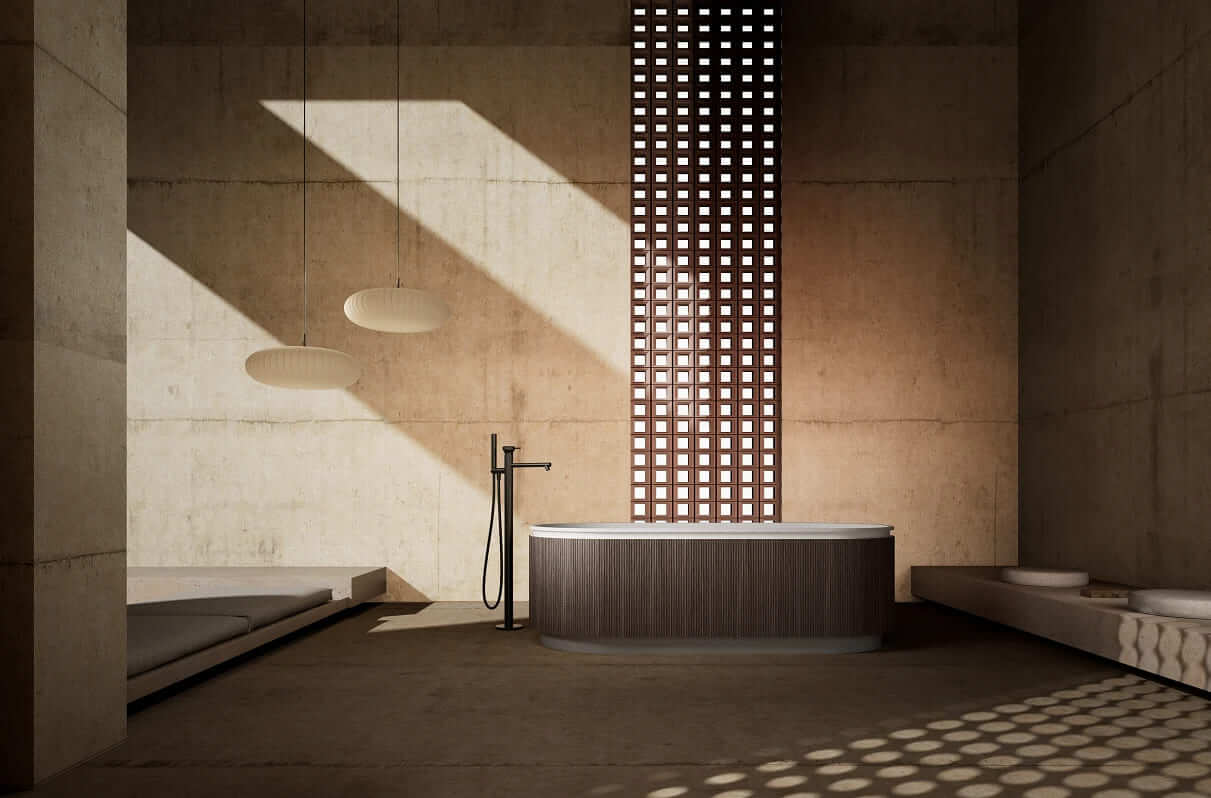
Introduction: Designing a Bathroom That Feels Intentional
In today’s U.S. homes, the bathroom has evolved far beyond a purely functional space. It’s where design, comfort, and daily rituals come together, shaping how we start and end each day. At the center of this transformation is the freestanding bathtub—an architectural feature that brings both visual presence and everyday usability into the room.
But before choosing a style, material, or finish, one question matters most: how much space do you actually need for a freestanding bathtub? Many homeowners begin by researching standard tub size, bathtub dimensions, or average bathtub size. While these are useful starting points, they don’t fully answer how a tub will function within a real space. A well-designed bathroom considers not only the bathtub size, but also circulation, layout, and how the tub interacts with the surrounding environment.

What Is a Standard Bathtub Size in the U.S.?
Most U.S. homes are built around a familiar baseline when it comes to standard bathtub dimensions. A typical bathtub is about 60 inches long, 30 inches wide, and 20 to 22 inches high. These measurements are commonly referred to as standard tub size or standard bathtub dimensions and are widely used in alcove installations.
However, a freestanding bathtub is not restricted by these limits. Unlike built-in tubs, freestanding models offer more flexibility in both size and placement. Today’s designs range from compact tubs suited for smaller bathrooms to larger soaking tubs designed for comfort and relaxation.
Understanding Bathtub Dimensions That Actually Matter
While standard measurements provide a helpful reference, choosing the right bathtub comes down to how those dimensions translate into real comfort. Bathtub length, for example, plays a key role in usability. While 60 inches is considered standard, smaller spaces may benefit from a 55-inch tub, while taller users or those seeking a more relaxed soak often prefer lengths between 66 and 72 inches.
Width also affects both comfort and layout. Most bathtubs are around 30 inches wide, but freestanding tubs can be slightly wider, offering more interior space while requiring additional room in the layout. Height, or depth, is equally important—especially for soaking tubs. Standard tubs range from 20 to 24 inches high, while deeper designs allow for a more immersive bathing experience.

Common Bathtub Sizes at a Glance
To make planning easier, most residential bathtubs fall into a few standard size categories. While exact dimensions may vary, the table below provides a quick reference for common bathtub types used in U.S. homes.
| Type | Length | Width | Height | Use Case |
|---|---|---|---|---|
| Alcove bathtub | 60" | 30" | 20" | Standard home installations |
| Freestanding tub | 55–72" | 27–32" | 22–26" | Design-focused layouts |
| Soaking tub | 60–72" | 30–36" | 24–26" | Spa-style soaking experience |
These ranges reflect typical bathtub dimensions found in modern bathrooms. A freestanding bathtub offers greater flexibility, but also requires more thoughtful planning.
Types of Bathtubs and Their Space Requirements
Different types of bathtubs require different amounts of space, which directly affects how your bathroom is planned. Alcove bathtubs are built into three walls and are the most space-efficient option, making them ideal for compact layouts. Drop-in tubs are installed into a deck or platform, allowing for more customization but requiring additional structure.
Freestanding bathtubs, on the other hand, require open space around them. Because they are not attached to walls, they naturally become the focal point of the room. This means that beyond bathtub size, you must also consider how much space surrounds the tub and how it fits within the overall layout.
How Much Space Do You Need Around a Freestanding Bathtub?
This is the most important factor—and where many bathroom designs fall short. Even if you choose the correct bathtub size, inadequate spacing can make the room feel cramped and uncomfortable.
As a general guideline, you should allow at least 6 inches of clearance around the tub. For a more comfortable layout, 12 inches is recommended, while the entry side should have 24 to 30 inches of space for safe and easy access.
In well-designed bathrooms, spacing is intentional. The openness around a freestanding bathtub is what creates a sense of balance, comfort, and luxury.
Matching Tub Size to Bathroom Size
Choosing the right freestanding bathtub is not just about dimensions—it’s about proportion. In smaller bathrooms, compact tubs or alcove designs are often more practical. Mid-size bathrooms can accommodate a standard freestanding bathtub with proper clearance, while larger bathrooms allow for oversized soaking tubs that act as a design statement.
The goal is always the same: the bathtub should feel integrated within the space, not oversized or out of place.

How to Measure a Bathtub Properly
If you are planning a renovation or replacing an existing tub, accurate measurements are essential. Start by measuring the overall length, width, and height of the bathtub, then check the internal soaking depth to ensure comfort.
Taking precise measurements helps avoid installation issues and ensures the bathtub fits seamlessly within your layout.
Structural Considerations You Shouldn’t Overlook
One often overlooked factor is weight. A filled bathtub can exceed 1,000 pounds, particularly for larger soaking tubs made from heavier materials. This is especially important for upper-floor installations, where additional structural support may be required.
Planning ahead helps prevent costly structural adjustments later.
Why Space Defines Luxury in Bathroom Design
In modern American interiors, luxury is no longer defined by size alone—it’s defined by how space is used. A freestanding bathtub should feel visually open, not confined. Avoid placing it too close to walls, and when possible, use symmetry to create a balanced layout.
Even standard bathtub dimensions can feel elevated when combined with thoughtful spacing and intentional design.
Final Planning Checklist
Before finalizing your bathroom design, make sure you have considered all key factors. Confirm your bathtub size, allow proper clearance, plan plumbing placement, check floor load capacity, and review the overall visual balance of the space.
Final Thoughts: Measure with Purpose, Design with Confidence
A freestanding bathtub is more than just a fixture—it’s a reflection of how a space is designed and experienced. Whether you are working with standard bathtub dimensions or exploring larger soaking tub sizes, the goal remains the same: to create a bathroom that feels open, comfortable, and intentionally designed.