Buying a bathtub is about much more than choosing a style that looks beautiful in your bathroom. Behind every relaxing soak is a carefully designed system of components working together to deliver water, manage drainage, prevent leaks, and provide years of reliable performance. While most homeowners recognize the faucet and drain, many of the parts that keep a bathtub functioning properly remain hidden beneath the surface.
Understanding how these components work isn't just useful for plumbers. Whether you're remodeling a bathroom, shopping for a freestanding tub, replacing worn hardware, or simply trying to diagnose a slow drain, knowing the basic anatomy of a bathtub helps you make more informed decisions and avoid unnecessary repair costs.
The good news is that a bathtub isn't nearly as complicated as it might seem. Most modern bathtubs share the same core structure, with each component performing a specific job to ensure water flows where it should, stays where it's needed, and drains away safely when your bath is over.
Before exploring each part individually, it's helpful to understand how these components connect to form a complete bathtub system.
Diagram Recommendation
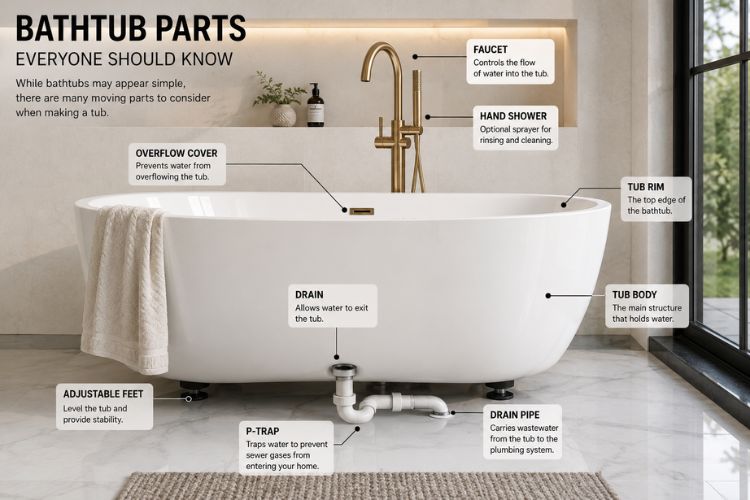
Insert a labeled bathtub anatomy illustration here showing the major components, including the faucet, spout, tub basin, rim, overflow, drain stopper, drain flange, waste shoe, P-trap, and drain pipe.
Once you've seen the overall layout, identifying each part becomes much easier.
| Bathtub Part | Primary Function | Visible |
|---|---|---|
| Tub Basin | Holds water and provides the bathing area | ✓ |
| Rim | Supports the edge of the tub and helps contain splashes | ✓ |
| Faucet & Spout | Deliver hot and cold water into the bathtub | ✓ |
| Overflow | Prevents excess water from spilling over the edge | ✓ |
| Drain Stopper | Holds or releases bathwater | ✓ |
| Drain Flange | Connects the tub opening to the drain assembly | ✓ |
| Waste Shoe | Connects the drain beneath the bathtub | ✕ |
| P-Trap | Prevents sewer gases from entering the home | ✕ |
| Drain Pipe | Carries wastewater to the home's plumbing system | ✕ |
Although some of these components are hidden behind the wall or underneath the tub, every one of them contributes to the bathtub's overall performance. If a single part fails—whether it's a leaking overflow gasket, a worn drain stopper, or a cracked drain flange—it can affect the entire bathing experience.
The tub basin is naturally the centerpiece of the system. It's the area designed to hold water and support the bather, making its size, depth, and material some of the most important factors in both comfort and durability. Today's bathtubs are commonly manufactured from acrylic, solid surface stone resin, cast iron, fiberglass, or porcelain-coated steel, with each material offering different advantages in heat retention, maintenance, and lifespan.
Surrounding the basin is the rim, the finished edge that gives the bathtub its structural strength while helping reduce splashing. Depending on the type of bathtub, the rim may also play an important role during installation. Alcove and drop-in tubs rely on the rim for support against surrounding walls or decking, while freestanding tubs typically feature a slimmer rim that emphasizes a clean, modern appearance.
Water enters the bathtub through the faucet and spout, components that combine both function and design. While homeowners often choose fixtures based on appearance, they also affect how quickly the bathtub fills and how comfortable it is to use every day. Coordinating the finish of the faucet, spout, drain, and overflow cover creates a balanced, professionally designed bathroom that feels intentional rather than assembled piece by piece.
A few inches below the top edge of the bathtub sits the overflow opening, one of the most overlooked yet important safety features. If someone accidentally leaves the faucet running, excess water flows through the overflow channel and into the drainage system instead of spilling across the bathroom floor. Although it cannot prevent every overflow, it significantly reduces the risk of water damage in everyday use.
At the bottom of the tub is the drain assembly, where water exits after each bath. This area includes both the drain flange and the drain stopper. The flange forms a watertight connection between the bathtub and the plumbing beneath, while the stopper allows the tub to be filled for bathing and quickly emptied afterward. Modern freestanding bathtubs often use toe-touch or grid-style drains because they combine reliable performance with a minimalist appearance that complements contemporary bathroom design.
Many of the remaining components—including the waste shoe, P-trap, and drain pipe—are hidden beneath the bathtub. Although they're rarely seen, they perform some of the most important jobs in the entire system. The waste shoe connects the drain opening to the plumbing below, the P-trap creates a water seal that blocks sewer gases from entering the home, and the drain pipe safely carries wastewater into the household plumbing network. Without these concealed components working together, even the most beautiful bathtub wouldn't function properly.
Understanding how these visible and hidden parts interact provides a solid foundation for maintaining your bathtub, diagnosing common problems, and making smarter purchasing decisions. In the next section, we'll take a closer look at each component, explain the issues homeowners encounter most often, and show you which parts require regular maintenance—and which are designed to last for decades.
Caring for the Parts That Matter Most

Every bathtub contains dozens of individual components, but not all of them require the same level of attention. In fact, most structural parts—such as the tub basin, rim, and waste shoe—are designed to last for decades with very little maintenance. The parts that homeowners are most likely to encounter are usually the ones exposed to daily use, moisture, soap residue, and moving water.
The drain stopper, overflow assembly, faucet, caulking, and visible drain hardware experience the most wear over time. Regular cleaning and occasional inspection can significantly extend their lifespan while reducing the risk of leaks or unexpected repairs.
The table below highlights the components that benefit from routine maintenance.
| Bathtub Part | Maintenance | Recommended Frequency |
|---|---|---|
| Drain Stopper | Remove hair and soap buildup | Monthly |
| Drain Flange | Clean mineral deposits | Every 2–3 months |
| Overflow Plate | Check for debris and loose screws | Every 6 months |
| Faucet & Spout | Inspect for leaks and clean aerators | Every 6 months |
| Silicone Caulk | Check for cracks or mold | Twice a year |
| Drain Assembly | Inspect for leaks beneath the tub | Annually |
Most of these tasks require only a few minutes but can help prevent much larger plumbing problems later.
One of the most common mistakes homeowners make is waiting until a leak appears before inspecting the bathtub. Water damage often develops slowly behind walls or beneath flooring, making early maintenance one of the most effective ways to protect both the bathtub and the surrounding bathroom.
The Most Common Bathtub Problems—and What Usually Causes Them
Not every bathtub issue requires professional repair. Many common problems can be traced back to just a handful of components, and understanding where to look first can save both time and money.
A bathtub that drains slowly is almost always caused by hair, soap residue, or mineral buildup inside the drain assembly rather than a damaged bathtub itself. If water begins leaking around the drain opening, the issue is often a worn gasket, loose drain flange, or deteriorated plumber's putty. Overflow leaks, meanwhile, are commonly caused by aging seals hidden behind the overflow plate.
Small problems like these are easy to overlook, yet they often become much more expensive if left unresolved.
| Problem | Most Likely Cause | First Thing to Check |
|---|---|---|
| Slow drainage | Hair and soap buildup | Drain stopper and drain assembly |
| Standing water | Partial blockage | Drain pipe or P-trap |
| Water leaking beneath the tub | Loose drain flange or worn gasket | Drain connection |
| Overflow leaking | Damaged overflow gasket | Overflow plate |
| Unpleasant odors | Dirty drain or dry P-trap | Drain and trap |
| Mold around the tub | Aging or cracked caulk | Silicone seal |
Rather than replacing parts immediately, it's usually worth identifying the actual source of the problem first. In many cases, a simple cleaning or inexpensive replacement part restores the bathtub to like-new performance.
Knowing When to Repair—and When to Replace
Not every worn bathtub component needs to be replaced immediately. Some parts are inexpensive and designed to be replaced periodically, while others are built to last for decades.
Drain stoppers, silicone caulk, and overflow gaskets are considered normal wear items. Replacing them every few years is part of routine bathroom maintenance. On the other hand, structural components such as the bathtub shell, waste shoe, and drain piping generally remain in service for many years unless damaged by improper installation or corrosion.
The following chart provides a general idea of how long common bathtub components typically last under normal residential use.
| Component | Typical Lifespan |
|---|---|
| Silicone Caulk | 3–5 years |
| Drain Stopper | 5–10 years |
| Overflow Gasket | 5–10 years |
| Drain Assembly | 10–20 years |
| Faucet Cartridge | 10–15 years |
| Drain Pipe | 20+ years |
| Bathtub Shell | 20 years or more (depending on material) |
These figures are only general guidelines. Water quality, frequency of use, installation quality, and routine maintenance all influence how long individual components remain in good condition.
Can You Replace Bathtub Parts Yourself?
Many minor bathtub repairs are surprisingly DIY-friendly. Replacing a drain stopper, renewing old caulk, or installing a new overflow plate can often be completed with basic tools and a little patience.
More complex repairs, however, should usually be left to a qualified plumber—especially if they involve hidden plumbing behind walls or beneath the floor.
| Repair | DIY Friendly | Professional Recommended |
|---|---|---|
| Replace a drain stopper | ✓ | |
| Remove and reseal a drain flange | ✓ | |
| Replace silicone caulk | ✓ | |
| Install a new faucet | ✓ (if accessible) | |
| Repair a leaking drain pipe | ✓ | |
| Replace hidden plumbing | ✓ | |
| Repair water damage beneath the tub | ✓ |
Attempting repairs beyond your experience can sometimes create larger problems than the original issue. If a leak continues after replacing visible components, it's usually a sign that the problem lies deeper within the plumbing system.
A well-maintained bathtub rarely requires major repairs. Most issues begin with small, inexpensive components that gradually wear over time. Regular inspections, simple cleaning, and replacing inexpensive parts before they fail can help extend the life of the entire bathtub while keeping your bathroom performing as beautifully as it looks.
Choosing a Bathtub That’s Built to Last
When shopping for a new bathtub, it's easy to focus on visible features like shape, size, or material. While these factors certainly matter, the quality of the components behind the scenes often has an even greater impact on long-term performance.
A well-designed bathtub should function reliably for many years with minimal maintenance. That means paying attention not only to the tub itself, but also to the quality of the drain assembly, overflow system, plumbing connections, and hardware finishes. These details influence everything from how smoothly the tub drains to how resistant it is to leaks, corrosion, and everyday wear.
Before making a purchase, consider the following features:
| What to Look For | Why It Matters |
|---|---|
| Durable drain assembly | Reduces leaks and improves long-term reliability |
| High-quality overflow system | Helps prevent accidental water damage |
| Corrosion-resistant hardware | Extends the lifespan of visible metal components |
| Easy-to-clean drain design | Simplifies routine maintenance |
| Premium bathtub material | Improves durability, comfort, and heat retention |
| Reliable manufacturer warranty | Provides added peace of mind after installation |
A bathtub is a long-term investment, and choosing quality components from the beginning often saves both time and money over the years.
How Bathtub Parts Vary by Tub Style
Although the basic plumbing system remains similar, different bathtub styles use different hardware and installation methods.
Freestanding bathtubs, for example, often feature exposed floor-mounted drains and minimalist overflow covers that become part of the overall design. Alcove bathtubs typically conceal most plumbing behind finished walls, making future access more limited. Drop-in bathtubs hide the drain assembly beneath a surrounding deck, while corner tubs may require more specialized plumbing layouts due to their shape.
Understanding these differences helps homeowners choose replacement parts more confidently and makes future maintenance easier.
| Bathtub Style | Typical Features |
|---|---|
| Freestanding | Exposed drain location, decorative overflow, floor-mounted plumbing |
| Alcove | Concealed plumbing, integrated wall installation |
| Drop-in | Hidden plumbing beneath a deck, wider rim |
| Corner | Space-saving layout with customized drain routing |
No matter which style you choose, the goal remains the same: a bathtub that combines thoughtful engineering with dependable everyday performance.
Frequently Asked Questions
What are the main parts of a bathtub?
Most modern bathtubs include the tub basin, rim, faucet, spout, overflow, drain stopper, drain flange, waste shoe, P-trap, and drain pipe. Together, these components control water flow, drainage, and leak prevention.
Which bathtub part is most likely to wear out?
The drain stopper, silicone caulk, overflow gasket, and faucet cartridge experience the most frequent wear because they are exposed to daily use and constant moisture. Fortunately, these components are usually inexpensive and relatively easy to replace.
Can I replace bathtub hardware without replacing the bathtub?
Yes. Components such as drain stoppers, overflow plates, faucets, spouts, and visible drain hardware can often be replaced independently, allowing homeowners to refresh the appearance and functionality of a bathtub without installing a completely new one.
How long should a bathtub last?
The lifespan depends largely on the material and maintenance. A high-quality acrylic or solid surface bathtub can provide decades of reliable service when properly cared for, while routine replacement of small wear items helps keep the entire system functioning efficiently.
Are bathtub drains universal?
Many drain assemblies follow standard dimensions, but not all are interchangeable. Before purchasing replacement hardware, always verify the drain size, overflow configuration, and compatibility with your specific bathtub model.
Final Thoughts
A bathtub is more than a single fixture—it's a system of carefully engineered components working together to create a safe, comfortable, and relaxing bathing experience.
While features such as the drain, overflow, and faucet often receive the most attention, every part plays a role in ensuring reliable performance. Understanding how these components function not only makes routine maintenance easier but also helps homeowners choose better products, recognize potential issues earlier, and extend the life of their bathroom investment.
Whether you're planning a complete renovation or simply replacing a few worn components, taking the time to understand bathtub anatomy is a small step that can make a meaningful difference in the years ahead.
At MonBlari, we believe exceptional bathrooms are built on thoughtful design and lasting craftsmanship. From premium solid surface freestanding bathtubs to carefully selected hardware and accessories, every detail is chosen to deliver both everyday comfort and long-term reliability.